
AI news ·
From RPA to Autonomous AI: Redefining the Future of Intelligent Automation
Automation is evolving from fragile RPA bots to intelligent AI agents that adapt, learn, and handle complex workflows. This shift boosts efficiency and empowers business users.
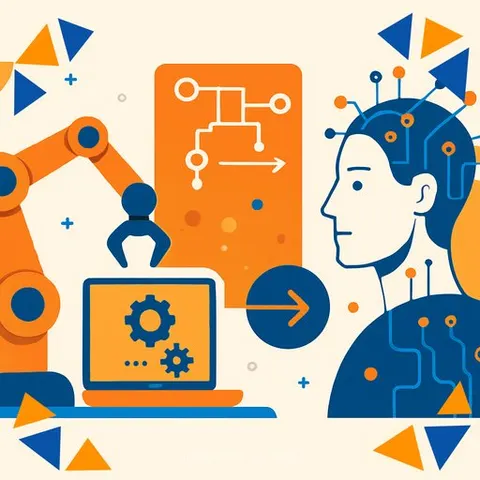
The Strategic Shift From RPA To Autonomous AI Systems
Automation has moved beyond simple rule-based tasks. While robotic process automation (RPA) efficiently handles structured, repetitive processes, its limitations are becoming clear. Businesses seeking more adaptable and intelligent automation are turning to AI agents. These systems offer flexibility and can manage complex workflows that traditional RPA bots cannot.
A recent McKinsey report highlights how AI agents are reshaping automation by interpreting context, learning from data, and adjusting in real time. This shift is not just about efficiency—it’s a fundamental change in how enterprises approach automation.
The Need For More Intelligent Automation
For years, RPA has automated tasks like data entry, invoice processing, and basic workflow automation, with platforms such as UiPath, Automation Anywhere, and Microsoft leading the way. However, RPA bots are fragile. They depend on fixed rules and break when data formats or user interfaces change.
- Fragility: RPA bots fail when faced with unexpected changes in data or systems.
- High Maintenance Costs: System updates require manual adjustments by IT teams.
- Limited Intelligence: RPA lacks reasoning and decision-making, making it unsuitable for complex, adaptive workflows.
While RPA remains useful for legacy systems, businesses aiming for scalable, flexible automation need to move beyond its constraints. The solution is AI agents—systems that make dynamic, informed decisions instead of following static rules.
AI Agents: The Next Evolution In Automation
AI agents act less like rigid bots and more like skilled digital colleagues. They use machine learning to interpret data, understand context, and make decisions on the fly.
For example, an RPA bot might extract data from an Excel sheet and input it into SAP, but if the format changes, it breaks. An AI agent can read an invoice, extract key details, verify them against business rules, and adapt to different formats without manual reprogramming.
Why Companies Are Making The Switch
More organizations are embracing AI-driven automation due to several clear benefits:
- Lower Operational Costs: AI reduces reliance on IT for maintenance, cutting expenses and boosting efficiency.
- Scalability and Flexibility: AI agents handle unstructured data, integrate across platforms, and evolve with business demands.
- Empowering Business Users: AI agents enable non-technical users to automate workflows using natural language commands, shifting control from IT to business units.
Best Practices and Pitfalls in Implementing AI Agents
Moving from rule-based automation to AI requires a shift in organizational mindset and approach. Success depends on several key factors:
- Cross-Functional Alignment: Involve IT, business process owners, finance, and operations early. Clear objectives like compliance or speed help focus AI training and deployment.
- Data Readiness: AI agents need clean, structured data. Poor data quality slows projects and reduces accuracy. Prioritize data cleansing and enrichment before rollout.
- Phased Rollout: Deploy in waves across regions to reduce pressure and allow learning and adjustment. Identify process bottlenecks upfront and quantify their cost to track ROI effectively.
Common mistakes include underinvesting in training, neglecting governance, and lacking clear policies for exception handling. AI automation is not a set-it-and-forget-it solution; it requires continuous monitoring and fine-tuning.
With the right foundation, companies can achieve significant improvements in processing speed, cost efficiency, and decision quality within months.
AI-Driven Automation Beyond Bots
RPA will still manage legacy systems, but the future of automation lies with AI agents. These intelligent systems create adaptable workflows that learn and evolve in real time, enabling humans to work alongside smarter automation.
The organizations that succeed will see intelligent automation as a strategic transformation—not just a technology upgrade. Combining AI’s capabilities with human creativity will shift automation from a cost-cutting measure to a driver of innovation and competitive advantage.