
AI news ·
German court rules AI music firm Suno violates copyrights
A Munich court ruled AI firm Suno violated copyright by using unlicensed tracks. The $5.4 billion company must disclose illicit revenue and pay damages.
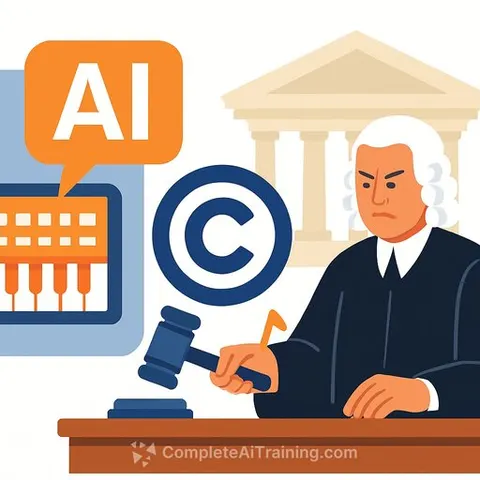
A Munich regional court ruled on Friday that AI music generation firm Suno violated copyright law by processing songs without a license, ordering the company to disclose illicit revenue and pay damages. The decision, part of a growing legal clash between artists and technology companies, has been described as having global significance.
The court found that Suno did not have the right to use tracks by artists represented by Gema, Germany's state-mandated licensing agency. Gema sued after Suno used free music from Alphabet's YouTube, including songs by the 1980s band Alphaville. The verdict is part of a broader AI for Legal trend as courts worldwide confront copyright claims against generative AI tools. Damages amounts have not yet been set, and Suno can appeal the ruling.
Reactions to the ruling
Suno said it disagreed with the ruling and would evaluate all available options, including an appeal. "This is a verdict of global significance," Gema CEO Tobias Holzmueller told Reuters. German government culture representative Wolfram Weimer called the verdict an important signal to support creators' rights in the digital music industry. "We need a regulatory framework that strengthens innovation and creativity," he said in a statement.
Broader legal context
Massachusetts-based Suno, valued at $5.4 billion in a June funding round, lets users generate songs from text prompts. AI music firms face accusations of training their models on copyrighted material without compensating composers. More than 1,800 artists are supporting class-action lawsuits against Suno and peer Udio. For those exploring AI's role in music, the AI Learning Path for Vocal Artists & Songwriters offers relevant guidance.
Why this matters for General, IT and Development, Government
For IT and development professionals, the ruling is a clear signal that training AI models on copyrighted content without a license carries legal risks. Courts may order disclosure of revenue and award damages even when the material was publicly available on platforms like YouTube. For government and regulatory teams, the case underlines the urgency of updating copyright frameworks to address generative AI while preserving creator rights. The German government's call for a framework that "strengthens innovation and creativity" reflects the balancing act policymakers face.