
AI news ·
Ghana expands AI skills training to 140 technical institutions
Ghana will train up to one million TVET educators and learners in AI and digital skills by 2027 through UNESCO's AI EmpowerED programme. Over 3,300 have already earned Microsoft certifications, but the expansion faces connectivity gaps in underserved communities.
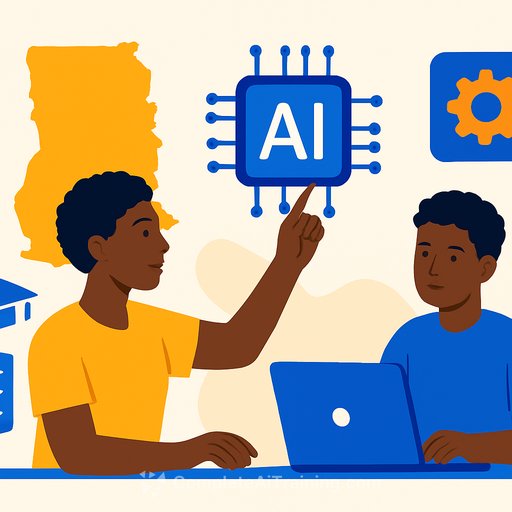
Ghana is rolling out AI and digital-skills training across its entire technical and vocational education system through UNESCO's AI EmpowerED programme, targeting up to one million educators and learners by the end of 2027. The expansion follows a pilot launched in 2025 and moves the country beyond small-scale experiments toward system-wide integration of AI skills in technical education.
UNESCO has formalised partnerships with the Ghana TVET Service and the Ghana Education Trust Fund (GETFund) to drive the second phase. More than 30 master trainers and around 3,300 learners have already completed training and received Microsoft certifications in AI and digital skills since the pilot began at AAMUSTED University.
How the train-the-trainer model works
The programme uses a cascade approach. Selected educators complete intensive training and Microsoft-accredited learning pathways, then pass those skills to other educators and learners across the system. The second phase will extend training to around 140 TVET institutions through four regional cycles.
Ghana is one of six countries participating in the wider initiative. India, Kenya, Malaysia, Uganda, and the United Republic of Tanzania are also moving from pilot programmes toward broader implementation.
The scale challenge and connectivity barriers
The jump from 3,300 trained learners to a target of one million by 2027 represents a major scaling test. The programme's train-the-trainer model is designed to build skills within existing institutions rather than relying solely on external training providers, but infrastructure gaps remain a known obstacle.
The Ghana TVET Service has acknowledged that connectivity remains a barrier in deprived and underserved communities. Whether the expansion reaches those communities will determine how broadly the benefits are distributed across the country's technical education system.
Why this matters for education professionals
For educators and administrators in technical and vocational education, Ghana's rollout offers a real-world case study in linking education policy directly to changing workplace requirements. The programme's structure - embedding AI skills training into existing institutions through a train-the-trainer model - provides a template that other countries in the UNESCO initiative are watching closely. The connectivity challenges Ghana faces are common across emerging economies, making the implementation details worth following for anyone planning similar programmes. For those developing AI for Teachers curricula, the Microsoft-accredited certification pathway used here shows one approach to credentialing that aligns with industry recognition.