
AI news ·
Google launches Dreambeans AI app in India with support for 13 languages
Google launched Dreambeans in India, its first market outside the U.S., with support for 13 languages. The app drew nearly 55,000 U.S. downloads since June, then fell 84% to about 5,500 in October.
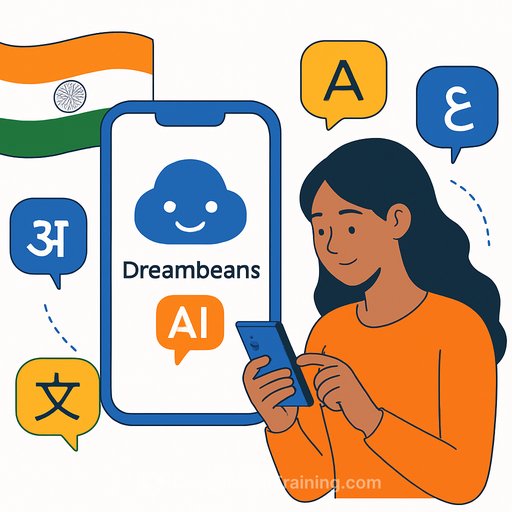
Google launched its experimental AI app Dreambeans in India on Monday, the first market outside the U.S. for a product that generates illustrated stories from a user's Google activity without any prompt. The app is available on Android and iOS with support for 13 local languages, including Hindi, Punjabi, Tamil, Telugu, and Bengali, alongside English. Google opened Dreambeans to all eligible U.S. users aged 18 and older less than two months ago.
Dreambeans, introduced in June, pulls information from connected Google services - Calendar, Gemini, Gmail, Photos, Search, and YouTube - to build personalized stories about a user's interests and daily life. The app started with static AI-generated illustrations. Google recently added a feature that uses its Veo video-generation model to animate images in select stories.
Why India first
Google product manager Gozde Oznur said the company picked India because of strong user interest and the reach of its services there. India stood out for its high overlap of users across Gemini, Gmail, and Google Photos, she said during a press briefing.
The language support has a limit. Users can select only one language at a time for their generated stories. The app can draw on information across Google services in multiple languages, but it cannot currently mix languages in a single story, Oznur said. That could hold back adoption in a country where many people switch between Hindi and English mid-sentence.
Downloads fall after U.S. rollout
Dreambeans has recorded nearly 55,000 downloads in the U.S. since its June debut, according to estimates from market intelligence firm Sensor Tower. About 63% came in September, when Google opened the app to all eligible U.S. users. Downloads then dropped 84% month over month to roughly 5,500 in October.
In its first 30 days after the broad U.S. release, Dreambeans drew an estimated 29,000 downloads. Sensor Tower put first-month figures for general-purpose AI apps far higher over the same window: 7.4 million for Meta's Muse, 2.8 million for ChatGPT, 362,000 for Grok Bot, and 155,000 for Claude. Dreambeans generates personalized stories rather than answering open-ended queries, which sets it apart from those apps.
Privacy and control questions
The app relies on Google's Personal Intelligence technology to read connected services and personalize its output. Those services can hold sensitive personal information that some users won't want to hand to an AI app just to get illustrated stories. Users can choose which services to connect and disconnect them at any time, Oznur said. They can also delete their Dreambeans data from inside the app, and she said information deleted from the underlying services is also removed from the app's personalization system.
Users can tell Dreambeans to avoid certain subjects, including business-related information, and the app will try to adjust. The app is limited to personal Gmail accounts, not enterprise users, and generated stories are visible only to the account holder.
The proactive approach carries another risk: surfacing memories a user may find upsetting. Oznur acknowledged Dreambeans could generate stories involving people who have died. She compared the subject controls to settings in Google Photos that let users limit which memories appear. Oznur also said Google is exploring ways to make Dreambeans more actionable, moving beyond stories and recommendations to help users act on its suggestions.
Why this matters for creatives, marketers, and support teams
Dreambeans is a working example of AI that assembles content from a user's own data before anyone asks for it - the opposite of the prompt-and-response pattern most teams have built workflows around. For marketers and writers, the app shows how Google is testing passive, personalized content generation inside its own ecosystem, which is where many customers already spend their attention. Support and product teams should note the control model: opt-in service connections, per-topic exclusions, and account-level visibility. Those are the settings customers will expect when similar features reach other Google products. Anyone building with generative models can study how the app handles language limits and sensitive subjects, both of which will shape adoption in multilingual markets. Teams that want to get ahead on these capabilities can start with Generative AI Courses, and those working in content and design can review AI for Creatives Courses.