
AI news ·
Government deploys AI diagnostic systems across Sri Lankan hospitals
Sri Lanka linked over 130 hospitals under a centralized digital health plan and installed its first AI-powered MRI scanner at a cost exceeding Rs. 450 million.
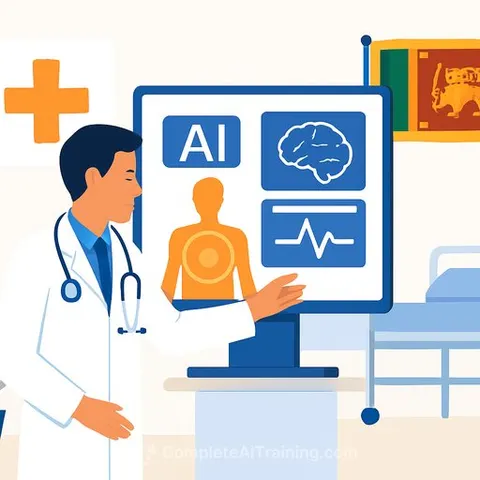
Sri Lanka's Ministry of Health has linked over 130 hospitals under a centralized digital health blueprint and launched AI diagnostic pilot projects across multiple government hospitals, a move the government describes as central to strengthening specialist healthcare services. The initiative arrives alongside a prediction from futurist Ray Kurzweil that humanity will reach "longevity escape velocity" around 2032, a point where medical progress adds more healthy time than aging removes.
Speaking at the Fifth Annual Academic Session of the Neurosurgeons Association of Sri Lanka, the Minister of Health said that strengthening specialist healthcare services is among the government's priorities. The diagnostic systems now being tested use technology that can view more than 1,000 health conditions, generating awareness of conditions conducive to health breakdowns before they escalate.
Major AI installations in public hospitals
The National Hospital of Sri Lanka installed the country's first AI-powered MRI scanner in a government facility at a cost of over Rs. 450 million, targeting neurosurgery and emergency diagnostics. The Colombo South Teaching Hospital in Kalubowila launched a cardiac catheterisation laboratory and Digital Subtraction Angiography unit with AI-based real-time imaging for heart, vascular, and kidney diseases. In the Northern Province, Jaffna Teaching Hospital opened a Rs. 300 million AI-equipped catheterisation lab offering AI-assisted cardiac diagnosis and minimally invasive treatment options.
Private sector initiatives are also introducing AI diagnostic tools, though the public rollout remains the government's primary focus. The draft national framework designates healthcare as a core priority sector for safe, transparent, and human-centric AI adoption.
Institutional support and international partnerships
The World Health Organization works closely with Sri Lanka's Ministry of Health on digital transformation. The Faculty of Medicine at the University of Colombo hosts the Centre for Health Systems Policy and Innovation, established with the WHO and the Asian Development Bank, to build institutional AI and precision medicine capabilities. UNESCO was consulted for ethical frameworks on responsible AI development, while the UNDP engages with digital economy stakeholders on ethical safeguards and Digital Public Infrastructure for sector-wide AI integration.
Local bodies including the Sri Lanka College of Health Informatics provide technical expertise for digitising workflows. The Information and Communication Technology Agency partners with healthcare providers and international tech ventures to accelerate digital health ecosystems. The Ministry of Health of the Russian Federation held high-level bilateral talks in Colombo focused on sharing AI for Healthcare diagnostic technologies and specialist training models.
Infrastructure and data barriers
Despite the progress, several obstacles slow large-scale public rollout. Health records remain siloed and paper-based in many regional public hospitals. Limited public funding and a shortage of specialised IT staff restrict expansion. Many rural hospitals lack high-speed connectivity, modern computing hardware, and advanced analytical tools. Medical professionals also lack formal training to use clinical AI tools safely in daily practice.
Fragmented health data scatters patient information across manual records, non-standardised systems, and localised databases. The absence of clean, structured, and ethnically representative local datasets hampers model training. Global models trained on Western populations risk high clinical bias if deployed locally without adaptation.
Workforce and regulatory gaps
Economic instability drives top technological and medical talent to migrate, creating a shortage of skilled AI professionals. Current healthcare workers lack upskilling opportunities or institutional training programmes in AI literacy. Multidisciplinary collaboration between computer science departments and clinical practitioners remains limited. No specialised regulatory guidelines address ethical AI deployment, safety accountability, or diagnostic liability.
Cultural resistance also plays a role. Clinicians frequently express skepticism toward what they describe as "black-box" medical technologies, and deep-rooted institutional preferences often favour stability over machine-generated recommendations.
Why this matters for healthcare professionals
For clinicians and healthcare administrators in Sri Lanka, the government's push toward AI-driven diagnostics will directly affect clinical workflows, data management practices, and the skills required for daily practice. The centralised digital health blueprint and pilot projects at hospitals in Colombo, Kalubowila, and Jaffna signal that familiarity with AI-assisted imaging and diagnostic tools is becoming a professional necessity, not a future consideration. The gap between these installations and the current lack of formal AI training programmes means healthcare professionals who seek out AI for Government literacy independently will be better positioned as the Ministry of Health expands the programme. Budget constraints and brain drain mean the timeline for institutional training remains uncertain, making self-directed upskilling a practical priority.