
AI news ·
Hackensack Meridian Health CEO discusses AI and virtual nursing to reduce staff burnout
CEO Robert Garrett says Hackensack Meridian Health uses AI and virtual nursing to reduce staff burnout. The tools handle monitoring and documentation to free bedside nurses.
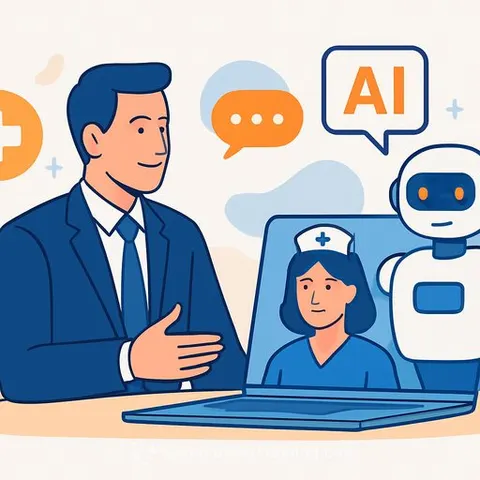
Hackensack Meridian Health CEO Robert Garrett outlined how artificial intelligence and virtual nursing programs are helping to reduce staff burnout across the health system's hospitals. Speaking during a Chief Healthcare Executive Roundtable, Garrett pointed to mounting workloads and administrative demands as core drivers of clinician fatigue, and positioned technology as a practical countermeasure.
Virtual nursing to ease bedside demands
Garrett highlighted virtual nursing as one initiative that is already changing how care teams operate. By allowing experienced nurses to monitor patients and handle documentation remotely, the model frees up bedside nurses to focus on direct patient care. "It's about giving people the tools to do the work they were trained to do, without the extra burden of tasks that a computer can handle," Garrett said.
The program also helps newer nurses get real-time guidance from veteran staff without pulling them away from other patients. Early results from the system's pilots show improved job satisfaction scores among nurses who participated, according to data shared during the roundtable.
AI's role in reducing administrative tasks
Garrett said AI is being deployed to tackle the documentation and clerical work that often consumes hours of each clinician's shift. Ambient listening tools that draft clinical notes during patient encounters, and automated prior authorization requests, are two areas where the health system is seeing measurable time savings. These uses of AI for Healthcare are not about replacing clinical judgment, Garrett said, but about removing repetitive work that contributes to burnout.
He noted that the technology must be integrated carefully, with input from the front-line staff who will use it. "If you roll out an AI tool without asking the nurses how it fits into their workflow, you'll fail," Garrett said. "The teams helped us design the interface so it actually makes their day easier."
Why this matters for healthcare professionals
For hospital leaders and clinicians, the roundtable discussion underscores a shift from viewing AI as a futuristic concept to treating it as a near-term lever for workforce stability. Garrett's emphasis on pairing technology with human-centered design signals that successful burnout reduction depends as much on implementation as on the tool itself. Healthcare organizations that involve staff in the selection and rollout of AI are more likely to see retention gains and lower turnover costs.