
AI news ·
Harvard dean backs more AI use and AI-proof assessments in college classrooms
Harvard Dean Deming told faculty that take-home exams are no longer sustainable for measuring mastery and urged them to stop policing AI use, instead redesigning assignments to be AI-proof.
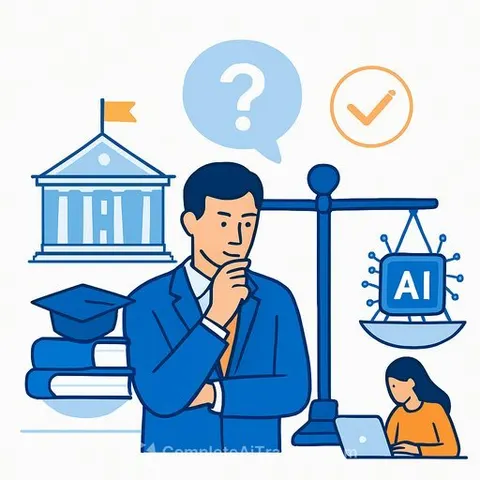
Harvard College Dean David J. Deming urged faculty to embrace AI in classrooms where it can deepen learning while redesigning assessments to be "AI-proof," writing in a Wednesday email to students that take-home exams and problem sets are no longer viable for measuring mastery. His push signals a rapid shift in academic integrity strategy, moving from detection to structural change - a decision that directly affects how writing is taught and evaluated at one of the world's most influential universities.
"Take-home exams and problem sets are no longer a sustainable way to assess mastery, and when coupled with unenforceable AI bans they create a difficult dilemma for students who don't want to cheat but also fear falling behind to their classmates," Deming wrote. He compared AI restraints to Odysseus binding himself to the mast of his ship to avoid temptation.
A deliberate move away from AI detection
Deming's most pointed advice targeted writing-based courses. Rather than increasing efforts to catch students using AI, he suggested "acceptance, or even encouragement" of the technology. "We would all benefit from getting out of the AI-detection business because it damages trust between faculty and students," he wrote. In a Substack post published minutes after the email, he described AI writing and detection tools as "trapped like Alice and the Red Queen in a race that will leave us running ever faster just to keep up."
The dean emphasized that his ideas are initial thoughts, not policy. Developing formal guidelines will require "extensive consultation" with faculty, staff, and students. "This is a fast-moving landscape and no one has all the answers," Deming wrote. The Bok Center for Teaching and Learning had already released similar guidance to faculty over the summer, including recommendations to place greater weight on in-person assessments.
Proctored exams and structural changes
Deming pointed toward a clear practical shift: moving away from take-home work toward proctored, in-person examinations. For longer assignments that cannot fit within a proctored window, he advocated for AI acceptance. This marks a departure from his first year as dean, when he stopped short of endorsing any blanket policy, arguing that different courses need different approaches. At an April forum, he contrasted how a large introductory computer science course and a small English seminar would require fundamentally different guardrails.
Deming returned to the theme of community as Harvard's "guiding purpose" - a response to both technological advancement and declining trust in experts. "How do we adapt to a world where technology makes knowledge more accessible than ever, and trust in experts is in decline? I believe that one answer is to invest more deeply in Harvard College as a learning community," he wrote. New initiatives this year include dining hall meal swipes for faculty and staff and expanded social events.
Why this matters for writers
When a Harvard dean tells faculty to stop policing AI use in papers and start redesigning assignments instead, the ripple effects extend far beyond Cambridge. For professional writers, this accelerates a reality already taking shape: AI literacy is becoming a baseline expectation, not a differentiator. The skills that survive - structuring arguments, developing voice, exercising judgment about what AI produces - are precisely the skills that separate competent writers from replaceable ones. The AI for Writers conversation is shifting from "should I use it" to "how do I use it well," and Deming's stance adds institutional weight to that transition. Writers who treat AI as a collaborator rather than a threat will find themselves aligned with where elite education is heading.