
AI news ·
Health lawyer says providers must correct AI misinformation to avoid malpractice
Doctors face malpractice risks if they fail to correct AI misinformation from patients. Legal liability for these errors is unsettled and will take years to clarify.
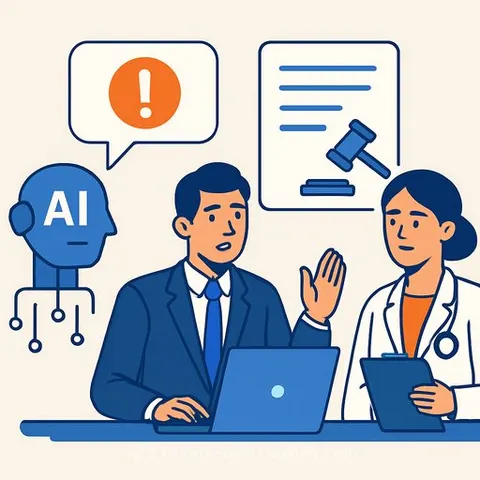
Patients are bringing AI chatbot outputs into exam rooms, sometimes trusting the technology as much as their physician. When that AI-generated information is wrong and a patient is harmed, the question of liability remains far from settled. Meghan O'Connor, a partner in Quarles & Brady's Health & Life Sciences Practice Group, told MedCity News that this uncertainty places providers in a precarious position.
Liability questions without clear answers
O'Connor said the legal system has not yet determined who bears responsibility when a patient relies on misleading AI content that a provider fails to correct. "This is one of the most significant open questions in healthcare law right now, and the honest answer is that liability allocation is going to be highly fact-dependent and will likely take years of litigation to clarify," she said.
The core issue: a provider's silence in the face of misinformation could be construed as part of a malpractice claim. The source of the bad information-whether an AI chatbot or an online forum-does not change the duty to the patient once it enters the clinical conversation.
Practical steps for providers
O'Connor offered clear guidance for clinicians navigating this new dynamic. "My practical recommendation for providers: correct misinformation, document the conversation and treat AI-sourced information the same way you'd treat any patient-reported information that conflicts with clinical judgment - address it directly and note that you did," she said.
She also underscored the risk of remaining silent. "Think of it this way: if a patient told you they read on an internet forum that drinking pickle juice would cure their glaucoma, no reasonable ophthalmologist would say nothing. AI-sourced misinformation should be treated the same way," O'Connor said.
Why this matters for legal professionals
The ambiguity around AI-generated medical advice creates a moving target for healthcare attorneys, compliance officers, and litigation teams. As patients adopt these tools faster than regulations can adapt, legal advisors must help provider clients establish documentation protocols and corrective communication practices now. Resources such as AI for Legal professionals can sharpen understanding of these cross-disciplinary risks. Similarly, AI for Healthcare training can help bridge knowledge gaps on the clinical side. Waiting for appellate court rulings to define the standard of care could expose providers and the legal teams that represent them to unnecessary claims.