
AI news ·
Higher education grapples with the future impact of technology
A large public university system updated its academic integrity policy after 18 months of debate. Instructors must now state if generative AI is permitted in each course.
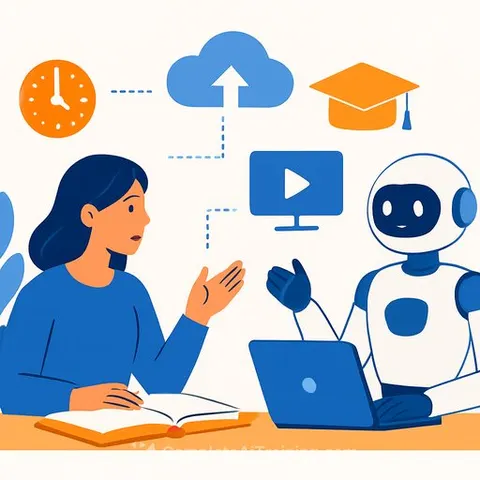
A large public university system has revised its academic integrity policy to include specific rules for the use of generative artificial intelligence, the latest sign that higher education institutions are moving to formalize their stance on the technology. The policy update, which took effect this semester, requires instructors to clearly state whether AI tools are permitted in each course and outlines consequences for unauthorized use.
The decision comes as educators across the country report a surge in student use of AI for assignments, prompting debates about plagiarism, critical thinking, and the future of assessment. Many institutions have spent the past year grappling with how to respond, and the new policy reflects a more structured approach.
A patchwork of campus responses
Over the last 18 months, colleges have taken divergent paths. Some, like Sciences Po in Paris, banned ChatGPT outright in early 2023. Others encouraged faculty to experiment with the technology in controlled ways. The new policy represents a middle ground-acknowledging AI's presence while setting clear boundaries.
Faculty senates at several institutions have formed working groups to study the issue. The American Association of University Professors has called for institutional policies that protect academic freedom while addressing the technology's impact.
Practical guidance for classrooms
For educators seeking frameworks to navigate this shift, resources on AI for Education provide concrete strategies for assignment design and policy development. The focus is on helping instructors move beyond blanket bans toward thoughtful integration.
Many teaching centers now offer workshops on AI literacy. These sessions cover how to revise syllabi, create AI-resistant assessments, and use generative tools to support-rather than replace-student work.
Why this matters for educators
The policy change highlights a pressing need for professional development. Instructors must understand the capabilities and limitations of AI to make informed decisions in their courses. The shift also raises questions about equity: students with access to premium AI tools may gain an unfair advantage if policies do not account for resource gaps.
For administrators, the move signals that delaying action is no longer viable. Clear, consistent policies can reduce confusion and give faculty the support they need to adapt their teaching.