
AI news ·
Homework, Heartbreak, and Help: Teens Are Turning to AI Chatbots
Students are turning to AI chatbots for schoolwork, support, even romance. Set clear rules, guard privacy, and keep real human connection at the heart of school.
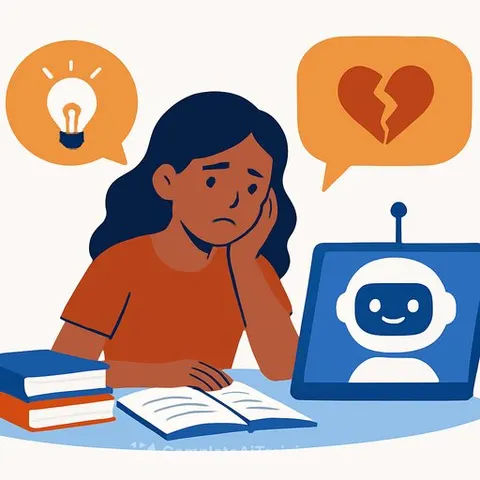
Students Love AI Chatbots - What Educators Need to Know Now
Students aren't waiting for permission. Most are already using AI chatbots to write, study, vent, and even date. That convenience is real - and so are the consequences for learning, privacy, and mental health.
The job now is simple: set clear rules, protect student data, and keep real human connection at the center of school life.
What the New Survey Says
- 86% of students used AI chatbots in the past academic year; about half used them for schoolwork.
- 42% said they or someone they know used chatbots for mental health support, escape, or as a "friend."
- Nearly 1 in 5 said they or a friend used AI chatbots to form romantic relationships.
As AI tools flood classrooms with promises of better outcomes, there's a real risk that students lean on bots instead of people. Left unchecked, that can erode social skills, increase isolation, and short-circuit learning.
Classroom Guardrails That Work
- Define "allowed vs. off-limits" AI uses by task: brainstorming and outlining, yes; full essay writing, no.
- Require AI citations. If a student used a chatbot, they note where, how, and why - just like any source.
- Shift some assessments to performance, oral checks, whiteboard problem-solving, and process logs.
- Teach prompt hygiene and verification. Students should cross-check claims with trusted sources.
- Set boundaries for "AI companions." Remind students: bots are tools, not therapists or friends.
- Make help human-first: promote school counselors, trusted adults, and peer supports prominently.
- Protect privacy: avoid tools that require student accounts when possible; use district-managed logins; disable data retention where you can.
- Provide teacher PD with real examples, rubrics, and model assignments (don't just hand out policies).
- Communicate with families: what's allowed, what's not, and how to talk about AI at home.
District Policy Checks
- Student data and immigration: over a quarter of educators report schools collect information on undocumented status; 17% say districts share records with immigration enforcement; 13% report staff contacting enforcement on their own. Audit data flows, lock down access, and clarify reporting rules.
- Vendor contracts: prohibit selling data, model training on student work, and unnecessary audio/video capture. Require deletion timelines and independent security audits.
- Classroom microphones and 24/7 monitoring: weigh any claimed benefits against privacy, consent, and chilling effects on speech. Involve teachers and families before deployment.
- Content moderation: pair tech tools with clear escalation paths for self-harm, threats, and harassment, and train staff on response - not just detection.
- Campus security: if using armed volunteers or "guardians," set strict selection, training, storage, and incident protocols; define roles to avoid mission creep.
- Library access and viewpoint diversity: ensure book policies meet First Amendment standards and include appeals and transparency.
- Threat hoaxes: standardize communication templates and coordinate with local law enforcement to reduce disruption and panic.
For a broader overview of student privacy and AI, see the Center for Democracy & Technology's work on schools and youth privacy here. For social media safety features relevant to teens, review Instagram's guidance here.
Action Steps This Week
- Publish a one-page "AI in Class" guide for students and families. Keep it specific to tasks and tools.
- Add an "AI use disclosure" line to major assignments. Make the expectation visible and routine.
- Run a 30-minute staff huddle on AI risks: plagiarism, hallucinations, privacy, and parasocial dependence.
- Audit two high-usage tools for data practices and disable unnecessary permissions.
- Identify three assignments you can shift to process-focused assessment to reduce chatbot shortcuts.
Quick Hits From Across the Country
- Immigration enforcement pressures are reaching schools: reports include data sharing with agencies, a student detained after a police tip, and even a school vendor stopped outside a campus.
- A Washington teen's livestreamed suicide has renewed attention on online groups that prey on youth. Build prevention into advisory, digital citizenship, and student support structures.
- A Long Island district rolled out AI surveillance with in-class microphones, raising significant privacy questions.
- A federal judge ordered hundreds of pulled books restored to Department of Defense school libraries after a First Amendment challenge.
- Utah approved more than 600 armed "school guardians," while other states report spikes in guns found on campuses.
- Instagram introduced stricter teen content limits for sex, drugs, and risky stunts.
- Multiple Florida districts faced a wave of non-credible bomb threats tied to a money-seeking hoax.
Helpful Training for Your Team
If your district is formalizing AI use, curate baseline skills for teachers and coaches so policy and practice match. A practical starting point: vetted AI courses grouped by role here.
Bottom line: students will keep using chatbots. Your job is to keep learning authentic, protect their data, and make sure they spend more time with people than with prompts.