
AI news ·
How AI Is Saving Time and Boosting Doctor Satisfaction in Health Systems
AI supports clinicians by automating routine tasks, reducing documentation time by 1-2 hours daily, and improving patient care. Clear communication and change management are key to success.
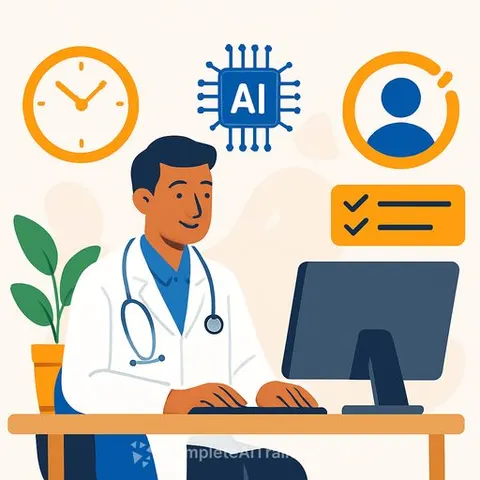
AI as a Valuable Tool for Clinicians and Health Systems
Artificial intelligence (AI) has the potential to support health systems and clinicians effectively if introduced with clear communication and proper management. At a recent event hosted by Thomas Jefferson University, healthcare leaders shared insights on how AI can save time and improve satisfaction among doctors.
Mount Sinai’s Practical Approach to AI
At Mount Sinai Health System in New York City, AI is already integrated into daily workflows. Arshad Rahim, MD, MBA, senior vice president and chief medical officer for population health, highlighted that AI is often seen as just advanced data mining, something they've practiced for years. However, their AI team is focusing on scaling routine tasks, such as identifying patients with high LDL cholesterol levels.
Rahim emphasized that AI isn't meant to replace healthcare teams but to augment their capabilities and increase efficiency, especially in ambulatory care and patient outreach. A key challenge remains in managing change and overcoming natural resistance from staff.
In radiology, AI performs initial reads on scans like CTs and MRIs, which radiologists then review. Rahim quoted a respected radiologist who said that radiologists who work effectively with AI will be more valuable than those who don't embrace it. This mindset helps ease concerns and promotes acceptance among clinicians.
Starting Points and Varied Progress
Not all systems are equally advanced in their AI use. Grayling Dwayne Yarbrough, MHA, vice president for population health at Sentara Healthcare in Virginia, noted that their AI efforts are still in early stages, mainly dabbling in clinical decision support without deep sophistication yet.
Kaiser Permanente’s Swift AI Rollout
Kaiser Permanente in San Francisco took a different path by deploying ambient AI rapidly to address clinician burnout. Ambient AI works quietly in the background, for example, by transcribing patient encounters without direct interaction.
Stephen Parodi, MD, executive vice president of the Permanente Medical Group, described how the rollout to 24,000 physicians happened within one month—far faster than the typical year-long implementation. Despite some hiccups, the system was well received.
After transcription, clinicians review and approve the notes, which has led to a significant reduction of 1 to 2 hours daily in documentation time. This extra time reduces after-hours work and enhances clinician satisfaction.
Additionally, primary care has seen an increase in patient capacity per time unit. Surprisingly, patient acceptance of AI presence during visits is very high, with surveys showing 92% to 93% of patients feeling their interactions improved because clinicians could focus more on them rather than on computer tasks.
Looking Ahead: Expanding AI Use
The success with ambient AI opens doors for other applications, such as assisting with visit coding and regulatory reporting. Kaiser Permanente is actively exploring these possibilities, aiming to streamline workflows further.
For healthcare managers, these examples highlight the importance of clear communication, change management, and quick, practical implementation in successfully integrating AI. When done right, AI can reduce workload, improve satisfaction, and enhance patient care.
For those interested in practical AI training applicable to healthcare and management, exploring courses on Complete AI Training can provide valuable skills to support these transitions.