
AI news ·
How AI Writing Tools Are Deepening Inequality in the Workplace
AI writing tools speed up writing but may widen gaps in confidence and skill, favoring those already strong writers. Teaching prompt writing and critical use is key to fairness.
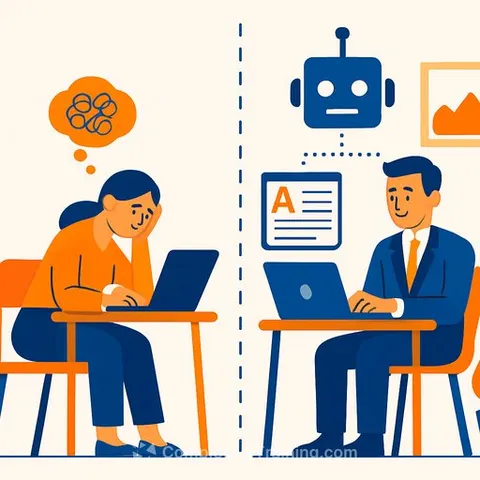
AI writing tools are becoming common in many workplaces, promising faster and easier writing for everyone. They help draft reports, organize arguments, and adjust tone quickly. Yet, beneath these benefits lies a less obvious effect: AI may be widening an existing gap—not just in access to technology, but in writing confidence, fluency, and support.
Writing Is More Than a Skill; It’s a Social Practice
In many jobs, writing isn’t just about grammar—it’s how we influence decisions, clarify risks, and shape outcomes. But not everyone starts with the same writing foundation. Some have years of experience with formal documents or mentors who guide their writing. Others learn on their own. These differences often reflect broader inequalities tied to socio-economic background, education access, language fluency, neurodivergence, race, class, or disability.
AI doesn’t erase these gaps. Instead, it can deepen them by rewarding existing writing confidence and fluency. This means those who already write well can use AI to reach even higher, while others risk becoming dependent on AI outputs without developing their own voice.
AI Rewards What You Already Have
AI tools amplify existing writing advantages. Skilled writers know when to accept AI suggestions and when to adjust them, maintaining control over tone and accuracy. Those less confident may accept AI-generated text without question, leading to passive reliance rather than growth. This feeds into the concept of cumulative advantage: those who start ahead pull further ahead.
Prompt Writing: A New Barrier
Using AI effectively requires a new skill: crafting clear, context-aware prompts. This skill depends on confidence and understanding the audience. Without support to develop prompt-writing abilities, some people will lag behind. If prompt writing becomes an unspoken requirement, it risks becoming another inequality unnoticed and unaddressed.
The Risk of False Neutrality
AI models often promote positive and inclusive language, which sounds beneficial but can lead to superficial or overly optimistic conclusions. For example, AI might suggest easy fixes to deep-rooted inequality issues, glossing over their complexity. This false positivity risks replacing genuine, grounded efforts toward inclusion.
What Can We Do?
- Make the gap visible. Acknowledge that writing confidence and fluency vary widely and that AI can widen these divides.
- Support real skill development. Teach prompt writing, editing, tone, and structure, not just tool operation.
- Question slick AI outputs. Don’t mistake polished AI text for true understanding or skill.
- Value diverse voices. Resist letting AI flatten unique writing styles, especially for those already under pressure to conform.
A Fairer Future for AI-Assisted Writing
Writing shapes influence and expression. It’s a form of power that isn’t equally shared. AI can either widen that gap or help close it—depending on how we approach it. Treating writing as more than just a technical skill but as a challenge connected to opportunity, confidence, and support is key.
If ignored, this gap threatens not only individuals but the clarity, rigor, and diversity of our work environments. Addressing it ensures AI tools truly serve all writers fairly.
For writers looking to build skills in AI tools and prompt writing, exploring targeted courses can help bridge these gaps. Resources like Complete AI Training’s prompt courses offer practical guidance on navigating AI writing tools effectively.