
AI news ·
Igad moves to create regional AI framework for Horn of Africa integration
IGAD launched a two-day consultation on September 4, 2026, to build a common regional AI framework for the Horn of Africa. The bloc's executive secretary framed data sovereignty and AI investment as central to accelerating development across member states.
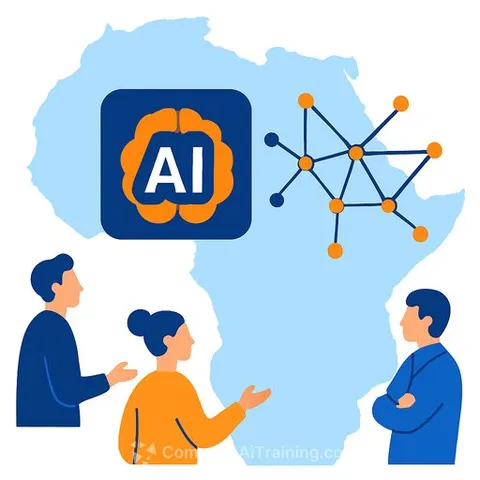
IGAD has begun work on a common regional artificial intelligence framework, opening a two-day consultation in Addis Ababa on September 4, 2026. The initiative aims to position the Horn of Africa as an active participant in AI development rather than a passive consumer of technology built elsewhere. For IT and development professionals in the region, the framework could reshape infrastructure priorities, data governance rules, and cross-border collaboration over the coming years.
AI as a development lever, not a headline
IGAD Executive Secretary Workneh Gebeyehu told delegates the question is no longer whether AI will transform economies and societies, but "how member states can harness the technology to accelerate development, improve people's lives and strengthen their collective future." He described AI as a force multiplier for the bloc's integration agenda - one that could enable virtual connectivity across geographical boundaries.
The consultation is examining practical applications. Workneh pointed to AI-powered systems for agricultural productivity, climate modelling and early-warning systems for droughts and floods, and diagnostic tools that could extend healthcare access to remote and border communities. These are not speculative use cases. They target longstanding regional challenges where even marginal improvements in prediction or resource allocation carry measurable weight.
Data sovereignty and the regulatory stack
Workneh placed data control at the center of the discussion, arguing that territorial sovereignty increasingly depends on a country's ability to "control, manage and responsibly use their own data." He called for stronger regulatory approaches at national, regional, and eventually continental levels - a signal that the framework will likely address data localization, cross-border data flows, and accountability mechanisms.
Ethiopia's Director for IGAD Affairs, Ketema Haile, reinforced the point by highlighting the country's newly established Artificial Intelligence University. He said the institution could contribute to AI development beyond Ethiopia's borders, serving other IGAD member states and the wider continent. The consultation is mapping current AI readiness across member states, including policy systems, institutional capacity, digital infrastructure, data ecosystems, and human capital gaps.
Three priorities on the table
Workneh identified three strategic priorities for the deliberations. First, directing AI investment toward areas capable of delivering the greatest socioeconomic impact. Second, closing gaps in digital infrastructure, policy, and human skills. Third, building regional synergies through policy harmonization, cross-border initiatives, and inter-institutional cooperation.
He stressed that the emerging framework should be owned by member states rather than treated as a Secretariat-led project. The process is also designed to align with the African Union Continental AI Strategy and the UN Global Digital Compact, situating the regional effort within broader multilateral governance structures.
Why this matters for IT and development professionals
When regional bodies start harmonizing AI policy, the downstream effects hit infrastructure procurement, data architecture decisions, and compliance requirements. If IGAD's framework moves toward shared data standards or cross-border interoperability rules, teams building systems for agriculture, health, or climate monitoring will need to design for those constraints early. The consultation's focus on human capital also signals potential shifts in training demand - particularly around AI for Policy Makers and governance skills that bridge technical implementation with regulatory requirements. For developers and architects working on public-sector or donor-funded projects in the region, the roadmap emerging from Addis Ababa will shape technical specifications sooner than many expect.