
AI news ·
India Today argues business schools must prioritize ethics and judgment as AI automates routine management tasks
Business schools must shift from teaching data analysis to building judgment skills as AI takes over routine forecasting and reporting. Managers who can spot model failures and bias will hold value that automation can't replace.
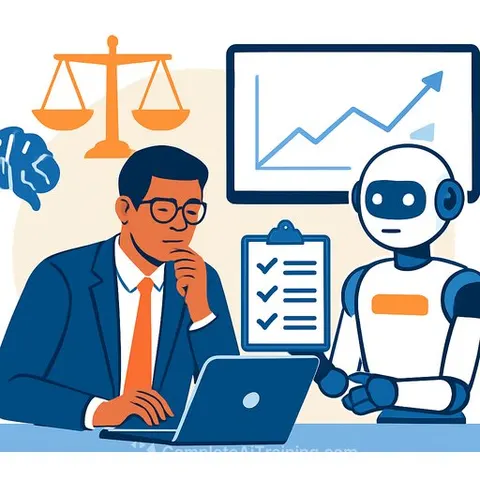
Business Schools Need to Teach Judgment, Not Just Data
Management education must shift focus from routine analytical tasks to decision-making under uncertainty, according to education commentary published in June 2026. As organizations automate data analysis, reporting, forecasting and operational monitoring, managers will be valued instead for interpreting machine-generated insights and weighing their limitations against business context.
The argument centers on a practical reality: AI systems supply probabilistic recommendations, not answers. A manager who can spot when a model's assumptions break down, or who understands how training data biases embed themselves in predictions, has skills that automation cannot replace.
What Should Change in Curricula
Business schools should teach three overlapping competencies. First, basic AI literacy-how models work, where they fail, and what their outputs actually mean. Second, structured practice in bias detection and trade-off analysis. Third, ethical reasoning that accounts for societal impact alongside profit.
Case studies grounded in real model outputs work better than textbook problems. Cross-functional projects that mix business students with technical teams expose future managers to the actual ambiguity they'll face. Assessments should measure judgment under uncertainty rather than whether students can identify a single correct answer.
The Bias Problem
AI systems inherit biases from their training data. A hiring algorithm trained on historical decisions perpetuates past discrimination. A credit-scoring model built on unequal lending patterns compounds inequality. Managers need to recognize these risks before deployment, not after.
Bias-awareness and ethical decision-making should be central to curricula, not optional modules. This means teaching students to ask which stakeholders bear the costs when a model fails, and whether those costs are acceptable.
What to Watch
Three signals will indicate whether schools are adapting:
- Whether accredited programs add explicit modules on algorithmic bias and ethics
- Whether business schools partner with technical teams or industry to expose students to real model outputs
- Whether assessments begin measuring judgment under uncertainty instead of formulaic problem-solving
The broader workforce skills debate of 2026 links readiness for an AI economy to the ability to use AI outputs responsibly without abdicating accountability. Schools that teach judgment alongside literacy will produce managers equipped to make that distinction.
For more on preparing leaders for AI-driven decision-making, see our resources on AI for Management and AI for Executives & Strategy.