
AI news ·
India's evidence laws struggle to keep pace with AI-generated forensic proof
Indian courts have no legal framework to evaluate AI-generated forensic evidence, treating algorithm outputs as ordinary electronic records under Section 65B. The new Bhartiya Sakshya Adhiniyam may offer a chance to fix that.
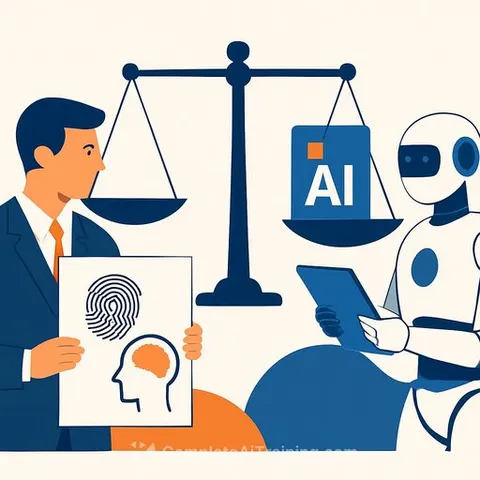
Indian courts face a reckoning: AI evidence doesn't fit existing legal rules
India's evidence laws were written for documents and witnesses, not algorithms. As artificial intelligence generates forensic proof in criminal investigations-from DNA analysis to digital document review-courts are discovering that Section 65B of the Indian Evidence Act, designed for electronic records, doesn't address how to test an AI system's reliability or cross-examine its reasoning.
The problem is immediate. AI tools like TrueAllele now untangle DNA mixtures that human analysts cannot. Deep learning systems identify microscopic markings on ballistics evidence with precision that exceeds manual comparison. Yet Indian courts currently treat these outputs as ordinary electronic records, requiring only authentication certificates rather than scrutiny of the algorithm itself.
The black box problem blocks admissibility
When a judge asks how an AI reached its conclusion, the answer often is: we don't know. The internal logic of proprietary algorithms remains opaque even to their developers. This "black box" creates what legal experts call an analytical gap-the court cannot verify the reasoning between raw data and the final conclusion.
Landmark Indian cases like Anvar P.V. and Arjun Panditrao Khotkar established that Section 65B(4) certificates are mandatory for electronic evidence. But this framework assumes human-readable records. It breaks down when the "record" is a statistical probability generated by machine learning.
Current practice requires judges or independent experts to re-verify AI methodology before relying on the evidence. This defeats the efficiency argument for using AI in the first place.
Other countries are moving faster
The United States applies the Daubert standard, which treats AI as expert testimony subject to gatekeeping. Judges evaluate testability, error rates, and peer review. But cases like State v. Loomis expose the tension: defendants have a right to challenge evidence, yet companies claim trade secrets protect their algorithms.
The European Union classified forensic AI systems as high-risk under its 2024 AI Act, demanding transparency and human oversight. Colombia launched UNESCO-backed judicial guidelines in December 2024 to ensure AI implementations protect fundamental rights. China integrated AI directly into courtrooms through 206 systems that flag evidentiary issues and suggest precedents.
India has neither framework nor guidelines.
The Bhartiya Sakshya Adhiniyam offers a chance to reset
India's transition from the Indian Evidence Act to the Bhartiya Sakshya Adhiniyam (BSA) creates an opportunity to write rules for machine-generated proof. Legal experts propose a dedicated provision requiring disclosure of system architecture, training data, and known biases before evidence enters court.
A second proposal would amend Section 45 of the IEA (or Section 39 of the BSA) to explicitly recognize validated algorithmic systems as legitimate sources of expertise. This shifts judicial focus from authenticating storage devices to interrogating the scientific validity of the algorithm.
The change would require courts to treat AI outputs as expert opinion-subject to challenge, cross-examination, and validation-rather than as objective digital records.
Judges and lawyers need technical literacy
Courts cannot reliably assess AI evidence without understanding how it works. India must close the technical literacy gap among judges and lawyers so they can interrogate forensic AI without intimidation.
Equally critical is parity of arms. Defendants need access to technical experts, possibly through legal aid, to challenge sophisticated tools deployed by the state. Courts must guard against automation bias-the tendency to treat machine outputs as objective truth simply because they come from a computer.
An independent oversight body modeled on the UK's Forensic Science Regulator could audit and validate forensic tools before courts use them. This would ensure technology serves justice without eroding constitutional protections.
The question is not whether AI belongs in Indian courtrooms. It already does. The question is whether Indian law will catch up before evidence that cannot be properly tested becomes routine.
For legal professionals, understanding AI for Legal applications and the technical foundations of AI Research in forensics is becoming essential to practice.