
AI news ·
Indie authors in Chelmsford reject generative AI as a threat to human connection
A Chelmsford indie book fair drew 25 vendors to oppose generative AI, with authors arguing it severs the human connection readers value. Organizer Emily Andrews said people feel cheated when they learn a work is AI-generated.
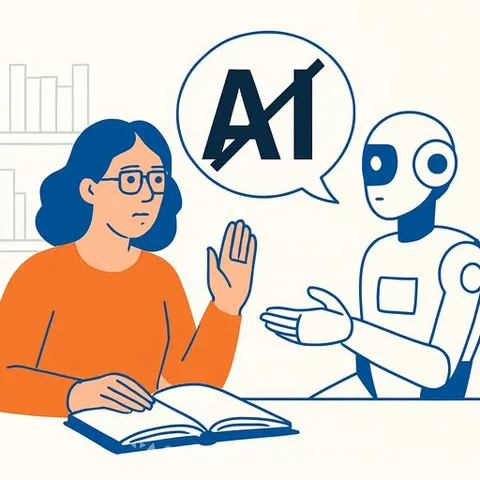
The inaugural Use Your Voice Indie Book Fair took a firm stance against generative AI on Saturday at the Chelmsford Community Centre and Arena, drawing 25 vendors - 21 of them authors - who argued that machine-generated prose severs the human connection readers and writers value most.
"I'm looking for a connection with the reader, and the readers and anyone who consumes any kind of art is looking for that connection with another human being," said organizer and local author Emily Andrews. "That's why people feel cheated when they learn something is generative AI, because the thread they had to unite them as a community has been lost."
Andrews described the event beforehand as "an anti-generative AI event." The technology can produce entire novels from a simple prompt like "write a western about monsters" in seconds, but the authors gathered Saturday saw little value in that speed.
The cost of shortcuts
Local author Matthew Del Papa called generative AI "a crutch" for creative work. "It's too easy," he said. "What have you accomplished?" He argued that writing builds skills through effort, and AI sidesteps that process entirely. Del Papa hires human artists for his book covers and said the real problem emerges "when you're taking a job that someone else could be doing."
For writers evaluating how AI fits into their workflow, the AI for Writers tag collects resources that separate useful tools from the kind of automation these authors rejected. Del Papa acknowledged a distinction between creative and editing uses, though he said he would not use AI for either.
"It steals from authors"
Chelmsford-based romance author Kelsey Elizabeth Wood took an equally hard line. "It steals from authors," she said. "It uses our work we poured our souls into to train its robots." Wood self-publishes books focused on strong female characters and relies on human beta readers and editors. She said AI would dilute the expression she builds into her work, and she resists changing stories just to suit a publisher's sense of marketability.
Commercial animator Greg Liko, who attended to market book trailer services, described AI-generated content as lacking a point of view. "It just looks cheap and doesn't look like you have skin in the game or that you worked for it," he said. "It's not selling well."
Why this matters for writers
The authors at Saturday's fair drew a line between automation and craft that carries practical weight. If readers feel cheated upon discovering a work is AI-generated - as Andrews described - then using those tools risks the trust that sustains an audience. For writers exploring where AI fits without sacrificing that trust, resources like the AI for Scriptwriters learning path offer guidance on tools that support rather than replace creative decisions. The consensus from the Chelmsford event was blunt: shortcuts that sever the human thread are bad for art and bad for business.