
AI news ·
Iran’s AI Ambitions Face Internal Divisions and Regional Rivalry as Parliament Approves National Plan
Iran approved a $115M National AI Plan to boost tech leadership amid regional rivalry with Saudi Arabia and the UAE. Internal debates and delays challenge swift progress.
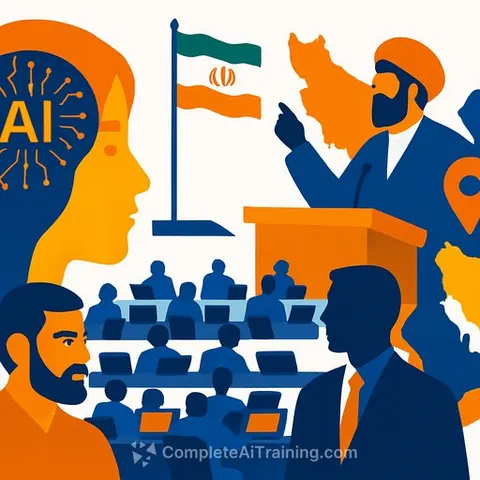
Iran’s National AI Plan: Strategic Move Amid Regional Tech Rivalry
On 18 May 2025, Iran’s Islamic Consultative Assembly approved the National Artificial Intelligence Plan, signaling a significant step in Tehran’s ambition to assert technological leadership in the Persian Gulf. The plan, backed by 187 votes in favor, highlights legislative urgency despite ongoing debates about authority, funding, and bureaucratic hurdles.
Key Points to Know
- Iran greenlit its national AI strategy despite internal disagreements.
- A $115 million investment targets regional leadership amid competition from Saudi Arabia and the UAE.
- Government delays have slowed Iran’s AI progress and strategic positioning.
Legislative Backdrop and Internal Dynamics
During the parliamentary session, MPs reviewed and approved the AI plan, which had earlier cleared the Industries Commission. A video featuring the Supreme Leader emphasized AI’s strategic importance and urgency. This move comes as Iran reacts to the United States’ recent AI partnerships with Saudi Arabia and the UAE, aiming to secure its regional status.
The plan’s approval sparked internal debate. Some government representatives argued that investing in AI falls under executive responsibility, citing constitutional provisions. The Ministry of Information and Communications Technology (ICT) has its own AI bill under review, expected to be presented to Parliament shortly.
Proponents of the parliamentary plan argue that government delays impair national interests. They view their action as a necessary intervention, not competition, to complement government efforts. They also pointed out the government’s failure to submit mandated reports following a 2024 law requiring timely AI strategy updates.
Geopolitical Context
Iran’s AI push occurs amid a complex geopolitical landscape. Despite technological isolation and limited investment, Tehran strives to keep pace with regional rivals. The country’s governance is fragmented, leading to conflicting power centers that influence strategic decisions. This dynamic affects Iran’s ability to implement cohesive AI policies swiftly.
Domestic Challenges
The government faces criticism for missing deadlines on AI legislation. Economic pressures, like ongoing power outages and rising material costs, strain resources, making large AI investments contentious. Additionally, creating new AI institutions risks duplicating existing bodies, such as the Supreme Council of Cyberspace and the Vice Presidency for Science and Technology.
This overlaps with the 7th Development Plan’s directive to reduce bureaucracy by 15%, posing further challenges to expanding AI governance structures.
Regional AI Competition
U.S. President Donald Trump’s May 2025 Gulf tour resulted in major AI agreements with Saudi Arabia and the UAE, intensifying regional competition. Saudi Arabia launched “Humain,” a state-backed AI firm partnering with U.S. tech giants like Nvidia, AMD, and Amazon Web Services, securing multi-billion dollar investments.
The UAE plans the largest AI data center outside the U.S. in Abu Dhabi, with massive energy and chip capacity commitments. These developments bolster U.S. influence in Middle Eastern AI and place pressure on Iran to accelerate its own efforts.
Despite challenges, Iran has a solid academic base and skilled workforce supporting its $115 million AI investment and growing ecosystem. The country is also advancing military AI applications, including drone and missile guidance systems, reflecting a strategic focus on next-generation defense capabilities.
Looking Ahead
The approved AI plan aims to expand Iran’s AI ecosystem, build infrastructure, and align with directives from the Supreme Leader. While opponents call for a government-submitted bill, timing remains critical. The current development plan outlines establishing a National AI Organisation, fostering trustworthy AI, and enhancing legal, ethical, and social frameworks.
Delaying AI initiatives risks Iran falling behind regional rivals and missing opportunities to improve healthcare, public administration, and defense. Balancing internal governance issues with the urgent need to keep pace regionally will determine Iran’s success in this strategic sector.
For executives and government officials interested in AI strategy and regional technology dynamics, understanding Iran’s challenges and ambitions offers insight into how emerging powers manage innovation under political and economic constraints.
Explore practical AI courses and training for strategic implementation at Complete AI Training.