
AI news ·
Irvine adopts AI fire-detecting sensors developed by 18-year-old
Irvine is deploying AI fire sensors built by an 18-year-old to detect smoke in seconds. The edge devices process data locally to alert crews without cloud access.
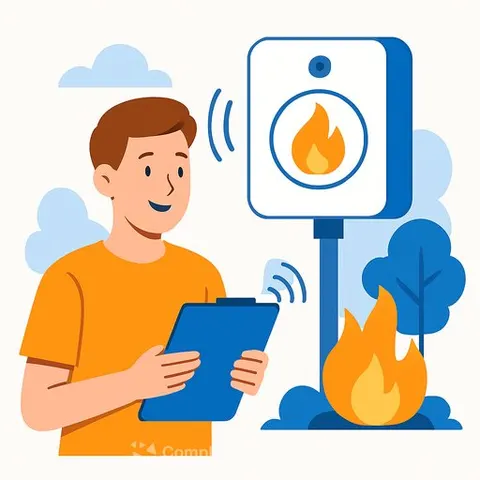
The city of Irvine will deploy AI-powered fire-detecting sensors developed by an 18-year-old inventor, a move that puts early wildfire detection directly into the hands of local infrastructure. The sensors are designed to spot smoke and heat signatures in real time, cutting the minutes that can mean the difference between containment and catastrophe.
How the sensors detect fires
The sensors use edge AI, processing visual and thermal data on the device itself without sending data to the cloud. Machine learning models trained on fire patterns analyze camera feeds continuously. When the system identifies a likely fire, it triggers an alert to emergency services within seconds. This on-device inference reduces latency and keeps the sensor operational even when connectivity is spotty.
The inventor behind the technology
The developer, whose name was not released, built the system through independent research and prototyping. The sensors have been tested in controlled environments, and the Irvine deployment marks the first large-scale municipal rollout of the technology. The project demonstrates how accessible AI tooling and hardware have become-even for a teenage inventor working outside a major research institution.
Why this matters for IT and Development
IT and development teams tracking real-world AI deployments will recognize the underlying challenges: optimizing models for constrained hardware, building reliable data pipelines, and maintaining sensor networks in harsh conditions. The Irvine project echoes broader trends in AI for IT & Development, where machine learning is moving from centralized servers to distributed edge devices. For professionals building monitoring systems, this deployment is a concrete example of how edge AI can operate in public safety contexts without depending on constant cloud connectivity.