
AI news ·
Is the Okanagan’s Food Identity Fading Amid Change?
The Okanagan’s food scene is shifting with changing farms and new businesses, but its identity remains vibrant. Positive efforts can keep its local flavor strong.
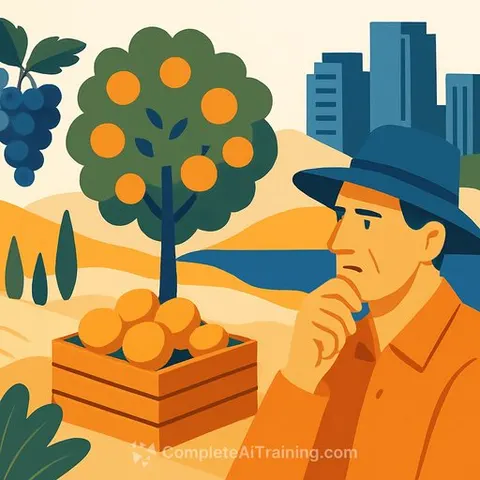
Is the Okanagan Losing Its Food Identity?
The Okanagan region has long been celebrated for its abundant fruit, local food, and renowned wine industry. Occasionally, when faced with a creative block, I turn to artificial intelligence tools for writing prompts. These tools often offer predictable suggestions, but sometimes they shed light on unexpected angles worth exploring.
Recently, an AI suggested the provocative title: "Is the Okanagan losing its food identity?" The opening paragraph it generated painted a picture of change—once, the region’s food culture was defined by orchards, farm stands, and family-owned restaurants connected deeply with local farmers. Now, with new developments, shifting vineyard ownership, and chain restaurants emerging in small towns, the question arises: is the local food scene losing its authentic touch?
This prompt made me pause. Is the Okanagan really losing its identity? And why would AI pick this up as a top suggestion? When I asked the AI to explain, it pointed to factors like rapid development, farmland being sold or repurposed, farmers facing challenges from climate and rising costs, and tourism leaning toward generic experiences rather than unique local offerings.
My take? The region's food identity isn’t disappearing—it’s changing. Take Penticton, once called the “City of peaches and beaches.” The beaches remain, but peach harvests have faltered recently. Kelowna, once popular for waterslides and go-carting, is now better known for its food and wine. These shifts reflect natural evolution rather than loss.
Given how AI and search algorithms influence what we see and discuss, it’s worth asking if we need to adjust our narrative. The current focus tends to be on agricultural struggles, challenges in the wine industry due to unpredictable harvests, rising costs, and altered travel behaviors. These are real issues, but they don’t have to define the entire story.
What might help is more direct, real-world conversations and collaboration. About 15 years ago, a group of local associations, businesses, and individuals created a wave of online buzz that helped Penticton secure the 2013 Wine Bloggers’ Conference. In 2012, The Huffington Post even named Penticton one of the top 10 world travel destinations based on millions of travel-related online comments.
These examples show that positive momentum is possible. It just takes focused effort and genuine connection to ensure the Okanagan’s food identity remains strong and vibrant.