
AI news ·
Japan considers U.S. military AI system for Self-Defense Forces decision-making
Japan's Defense Ministry is exploring Palantir's AI for command, with costs set for fiscal 2027. This sparked demands for domestic alternatives over data sovereignty risks.
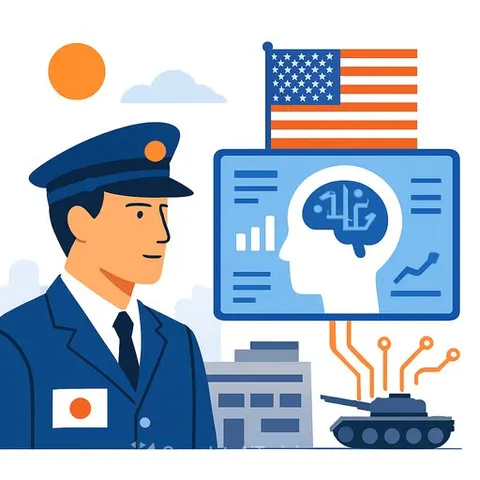
According to multiple government sources, Japan's Defense Ministry is exploring adoption of Palantir Technologies' Maven Smart System for Self-Defense Forces command-and-control. The move triggers calls within the government to build domestic AI alternatives as the Takaichi administration prepares to revise three key security documents this year to integrate AI into the SDF's decision-support framework, with related costs expected in the fiscal 2027 budget request.
Palantir provides data integration, operational planning, and automatic target detection for the U.S. Department of Defense. Its systems were reportedly used in U.S.-Israeli airstrikes against Iran in February. From late January to February, the AI system was also employed during Keen Edge, a joint command-post exercise between the SDF and U.S. Indo-Pacific Command-the first time the SDF has used AI at the core of command-and-control.
AI sovereignty concerns
The Japanese government has emphasized "AI sovereignty"-the ability to autonomously manage data and systems-raising alarms about dependence on a foreign firm. Because the AI provider and its supplying country can control usability and access, officials worry about potential information leaks through shared confidential data. These concerns have fueled calls within the government and ruling coalition to develop domestic AI command-and-control systems over the mid- to long term.
Some officials have proposed starting with a hybrid approach: combining Japanese and foreign systems initially, then transitioning to an all-Japanese version. The debate mirrors broader discussions in government about balancing off-the-shelf capability with long-term self-reliance, a theme familiar to those following AI for Government initiatives.
Why this matters for government professionals
For government decision-makers, the Japan case highlights the tension between rapid capability adoption and the strategic need to control sensitive AI infrastructure. Choosing a foreign system can accelerate deployment but introduces dependencies that may conflict with national security and data sovereignty. The push for domestic development reflects a growing recognition that AI used in defense must be governed by the same principles as any other critical asset: ownership, auditability, and resilience. Government professionals evaluating similar procurements should weigh not just technical performance, but the long-term control and security of the data and algorithms involved.