
AI news ·
Judge approves $1.5 billion artificial intelligence settlement that includes Omaha authors
A federal judge approved a $1.5 billion settlement between authors and AI firm Anthropic over pirated books. The payout covers nearly 500,000 titles used to train its models.
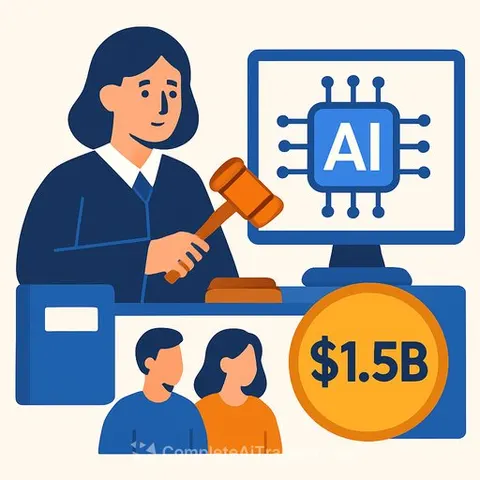
A federal judge in San Francisco gave final approval in July to a $1.5 billion settlement between a group of authors and AI research company Anthropic. The settlement covers nearly 500,000 books, including works by Omaha authors Lydia Kang and Ted Wheeler, after the court found Anthropic used pirated copies to train its AI models without permission.
Kang, a physician and author, discovered her books were included through the settlement website. "I would say I felt kinda sick when I saw that," Kang said. The database lists titles and links to case documents at www.anthropiccopyrightsettlement.com.
The court ruled that training AI chatbots using copyrighted books was not illegal, but it found Anthropic violated authors' rights by wrongfully acquiring books through pirate websites and storing them in a central library. The books were either pirated or purchased and destructively scanned.
Settlement payments and author response
Kang and Wheeler each expect to receive $3,000 per book included in the settlement, split between author and publisher. Neither has received payment yet. Agreements between authors and publishers determine how that share is divided. A spokesperson for Anthropic said more than 91% of authors in the settlement have claimed their share.
"Oh gosh like it's years of work. People sort of wonder what's the process of writing a book and getting it onto the shelf into this final version it's a lot of work the number of times you have to do copy edits, line edits," Kang said.
The value of human creativity
Despite the legal battle, Kang believes human creativity remains essential. "I would say your voice and your artistry and what you create is still as important as ever, I would say it's even more important," Kang said.
Student concerns and past disruptions
Wheeler, who teaches creative writing, often discusses AI with his students. Some have expressed distaste for large language models, with common complaints about workforce impact and environmental costs. He compared the moment to the arrival of Kindle e-readers. "That was another thing about is this really a book? How does your work live out in the world?" Wheeler said.
Why this matters for writers
The settlement signals that courts will hold AI companies accountable for how they obtain training data, even if the act of training itself isn't infringement. For writers, the case underscores the need to understand how their work might be used and to explore resources that help them navigate AI's role in the industry. Writers affected by these practices may find courses like AI for Writers useful for learning how to integrate AI tools while protecting their creative work.