
AI news ·
Judge bars attorney and orders costs after AI-generated filings cite fictitious cases
A California attorney was barred from a Massachusetts case and ordered to pay up to $10,000 in fees for filing AI-generated fictitious case citations.
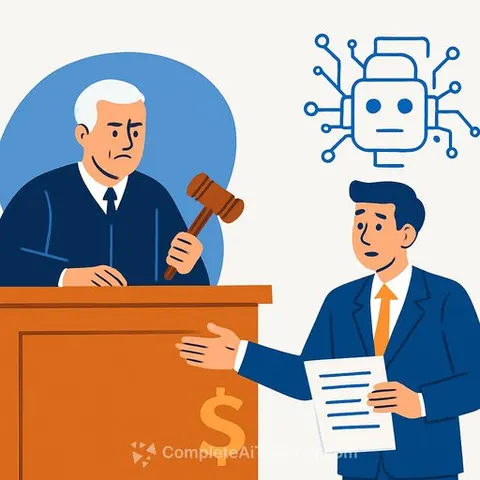
A California attorney has been barred from representing plaintiffs in a Massachusetts insurance dispute and ordered to pay up to $10,000 in opposing counsel's legal costs after a federal judge found he relied on "inaccurate and fictitious" case citations generated by artificial intelligence. The sanctions, handed down September 25, 2026, mark one of the most pointed judicial rebukes yet of AI misuse in legal filings, with the judge questioning whether the incident reflects a broader ethical decline in the profession.
U.S. District Judge Angel Kelley did not mince words in the order. The attorney's filings across three separate documents contained case references and holdings that simply do not exist - a pattern courts have increasingly encountered since generative AI tools became widely available to lawyers.
Fictitious cases in three filings
The attorney, whose name appears in the attached order, submitted the problematic citations in motions related to an insurance coverage dispute. Judge Kelley described the errors as not merely sloppy research but a fundamental failure of professional responsibility. The court ordered the attorney removed from the case and directed payment of the opposing side's legal fees, capped at $10,000.
The ruling comes amid a growing body of judicial orders nationwide addressing AI-generated hallucinations in legal documents. Several federal and state courts have issued standing orders requiring attorneys to disclose AI use, while bar associations in multiple states have released ethics guidance on the technology.
A profession under scrutiny
Judge Kelley's order went beyond the specific misconduct to raise concerns about the legal profession's direction. The judge questioned "our collective character" in the face of recurring incidents where attorneys file documents without verifying the accuracy of AI-drafted content. The case adds to a list of sanctions orders that name major AI providers, including Anthropic PBC, whose technology was referenced in court records associated with the dispute.
Law firms named in the case include Clyde & Co, Demeo LLP, and Keches Law Group. Companies connected to the broader matter include LexisNexis Legal & Professional and its parent company RELX PLC, along with Enterprise Holdings Inc. and The Travelers Cos. Inc.
Why this matters for legal, PR and communications professionals
For communications and PR teams working alongside legal departments, this order signals that AI-generated content carries reputational and financial risk when it enters formal proceedings unchecked. The $10,000 cost award is a tangible penalty, but the lasting damage comes from the public record - a federal judge questioning the integrity of a lawyer's work. Any organization that allows AI-drafted material into filings, disclosures, or public statements without human verification invites the same scrutiny. The expectation from courts is now explicit: a lawyer's signature means a human being has confirmed every factual claim, regardless of how the draft was produced.