
AI news ·
Law Society Tribunal suspends Canadian lawyer for six months for citing AI-generated fake case law
An Ontario lawyer was suspended for six months and fined CA$10,000 for citing fake AI cases. Mary Hyun-Soon Lee was also penalized for lying to the judge about using ChatGPT.
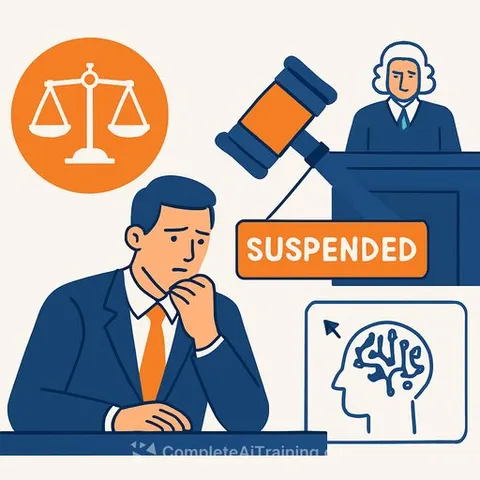
A Canadian family-law practitioner has been suspended for six months after citing AI-generated fake cases in court and then lying to both the judge and her professional regulator about how the document was prepared. The Law Society Tribunal of Ontario also ordered Mary Hyun-Soon Lee to pay CA$10,000 in legal costs, a penalty that underscores the professional risks of using tools like ChatGPT without understanding their limitations.
Three non-existent cases cited
Lee was representing a client in family-law proceedings when she brought an urgent motion before the court. Of the four cases she cited in her filing, three did not exist. The fourth was a real case, but its holding contradicted the argument Lee was trying to advance.
When the judge asked whether she had used ChatGPT to prepare the statement, Lee said she had not. In a subsequent letter, she told the judge that her staff had used generative AI for preliminary legal research and that she had failed to independently verify the citations before filing.
Misleading the court and the Law Society
During a later case conference on potential contempt-of-court proceedings, Lee changed her story. She told the judge that a law student had prepared the document using ChatGPT, adding she had been "shocked" to be told of this.
The Law Society of Ontario launched an investigation. Under that scrutiny, Lee admitted she had prepared the document herself and had employed no associate or law student at the time. She also explained that she did not understand how AI worked and did not know about hallucinations until the judge questioned her. She said she was taken aback, embarrassed, and did not know how to respond appropriately.
Tribunal cites 'repeated instances of dishonesty'
The three-member tribunal described Lee's conduct as "repeated instances of dishonesty" and "extremely serious integrity lapses." It considered whether a harsher penalty was warranted but accepted the genuineness of her remorse. The body also noted that Lee, who was nearing the end of her career, faced other adverse consequences including ongoing contempt-of-court proceedings.
The case highlights a growing challenge for the legal profession. As generative AI tools become more accessible, lawyers face pressure to use them efficiently - but the duty of candor to the court and the obligation to verify authorities remain non-delegable. For legal professionals navigating AI for Legal work, the risks of relying on outputs without independent verification are now measured in suspension orders and reputational damage, not hypothetical warnings.
Why this matters for legal professionals
The Lee case is not about an isolated technical mistake. It is about what happens after the mistake - the attempt to deflect blame first onto staff, then onto a fictitious law student. The tribunal penalized the cover-up as much as the original error. For any lawyer experimenting with AI-assisted research, the takeaway is blunt: verify every citation yourself, and if something goes wrong, disclose it immediately. The professional consequences of dishonesty will almost always exceed those of the initial error.