
AI news ·
Li Auto Launches Humanoid Robot Team as CEO Doubles Down on AI After Sales Miss
Li Auto is reorganizing around AI, creating a humanoid robot unit and a foundation model autonomy group. After missing 2024 goals, it targets ~550k sales and L4 by 2028.
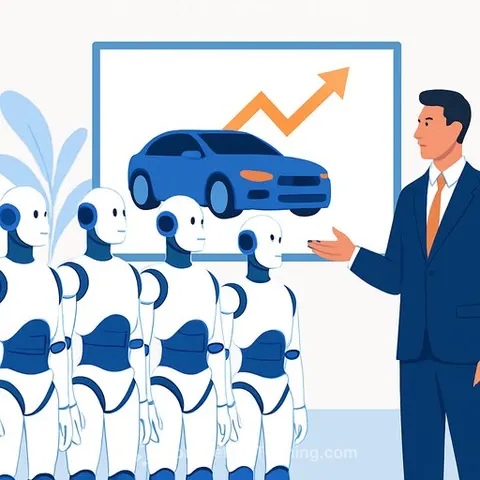
Li Auto Creates Humanoid Robot Division as CEO Accelerates AI Bet
Li Auto has reshaped its R&D organization around AI - spinning up a dedicated humanoid robot division and regrouping its autonomous driving team under a foundation model structure, according to LatePost. This shift comes after the company delivered 406,343 vehicles last year, missing its revised 640,000 goal by 37% and setting an ambition to sell about 550,000 vehicles this year, per 36kr.
Founder and CEO Li Xiang told employees this week that 2026 is the make-or-break window to establish leadership in AI. He also forecasted Level 4 autonomy by 2028 at the latest and said only a few companies will prevail across models, chips, operating systems, and embodied intelligence - and Li Auto intends to be one of them.
Why this move matters for executives
- Strategy reset under pressure: Missing volume targets and ongoing supply constraints are pushing Li Auto to differentiate on software and AI, not just hardware.
- Operating model shift: Organizing around foundation models signals a bet that one core stack can serve cars, robots, and future devices.
- Talent redeployment: Moving autonomy teams into a foundation model group and a robot unit aims to speed platform learning and reuse.
- Clear deadline: A public 2028 Level 4 target compresses timelines, budgets, and partner decisions.
Leaders looking to align strategy and governance to such a shift should review resources like AI for Executives & Strategy to shape executive priorities and decision frameworks.
The new structure
- Software division: Led by Gou Xiaofei (VP of intelligent space). Reports to President Ma Donghui, who heads the intelligent vehicle group.
- Humanoid robot team: Led by Lang Xianpeng (SVP of autonomous driving R&D). Also reports to Ma. Key transfers include Zhan Yifei (AI evaluation and ops) and Ling Lin (data annotation).
- Foundation model team: Led by Zhan Kun. Most autonomous driving employees move here. Reports to CTO Xie Yan, who leads the systems and computing group.
Progress so far on the stack
- Li Auto's "end-to-end + VLM" autonomous solution entered mass production in October 2024.
- Its VLA solution rolled out to all vehicles in September 2025 and updated to version 8.2 this month with an enhanced VLA driver model.
- Leadership view: 2026 is the last window to lock in AI leadership; Level 4 autonomy by 2028 remains the target. For context on L4 definitions, see the SAE levels of driving automation here.
Product roadmap and near-term execution
- Lineup expansion: One new battery-electric SUV will join the Mega MPV, i8 six-seat SUV, and i6 five-seat midsize SUV launched last year (May-September).
- Momentum pockets: Cumulative deliveries of the fully electric Mega MPV have surpassed 30,000 units.
- Bottlenecks: The i6 faces battery-related production constraints, with recent buyer wait times at 4-6 weeks, per Yiche.
- Re-emphasis on EREV: The company will lean back into extended-range EVs. The L-series SUVs will get major chassis and vehicle control upgrades, with the L9 prioritized.
Humanoid robots: scope and intent
- Li Auto will develop humanoid robots and unveil them as soon as feasible, extending its embodied AI ambitions beyond vehicles.
- Centralizing data, simulation, and model training across cars and robots could lower marginal costs per capability if execution holds.
Key risks
- Distraction risk: Adding a humanoid program while scaling autonomy and vehicle volumes can dilute focus.
- Compute and data costs: Foundation models, multimodal perception, and sim pipelines demand heavy investment.
- Supply constraints: Battery shortages and component lead times can derail delivery targets and cash planning.
- Talent market: Retaining and upskilling teams during reorgs is non-trivial, especially with global AI hiring pressure.
What executives should watch next
- Org throughput: Shipping cadence of autonomy releases (post-8.2) and time-to-fix on edge cases.
- Unit economics: Gross margin trends as software content grows and battery constraints ease.
- Robot demos with real tasks: Evidence that shared models/capabilities transfer between cars and robots.
- Partnerships: Chip, compute, and data deals that shore up training and inference capacity.
- Regulatory path: Milestones tied to high-autonomy pilots and city-by-city approvals. A primer on foundation models is available from Stanford's CRFM here.
Practical next steps for leadership teams
- Audit your AI org design: do teams align to shared models and data pipelines, or to products that duplicate effort?
- Stage-gate humanoid or robotics adjacencies: define the one or two anchor use cases that can share autonomy assets.
- Lock compute plans early: secure training/inference capacity before model and feature roadmaps outgrow budgets. For guidance on infrastructure, governance, and security, review the AI Learning Path for CIOs.
- Link go-to-market to autonomy readiness: market features you can support at scale; avoid over-promising.
If your team needs a quick way to map roles to AI skills and courses, see this curated catalog by job here.