
AI news ·
Masterminds Academy opens in Los Altos with a brain-led model focused on human capabilities in the age of AI
Masterminds Academy opened in Los Altos, California, structuring learning around groups of five to six students to develop adaptability and judgment as AI reshapes education.
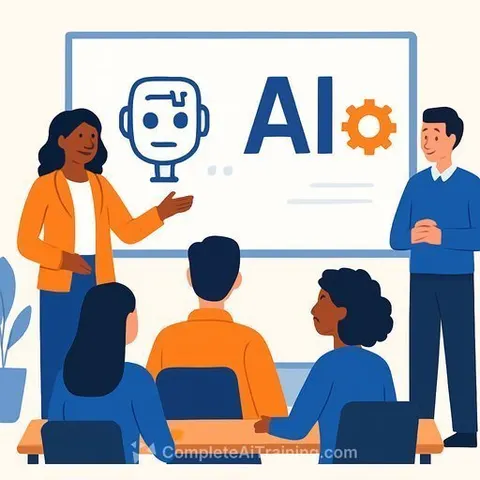
Masterminds Academy has opened in Los Altos, California, serving students from Early Years through Grade 8 with an educational model built around small groups and what the school calls "Brain Capital." The launch, announced September 9, 2026, brings more than a decade of development to Silicon Valley at a moment when artificial intelligence is forcing a reexamination of what children need to learn and which human capabilities schools should prioritize.
Shamail Siddiqi, Founder of Masterminds Academy, recently co-authored a Knowledge at Wharton article with Michael Platt, Faculty Director of the Wharton Neuroscience Initiative, alongside other researchers. The article argues that as AI handles more routine knowledge work, capabilities such as adaptability, judgment, emotional regulation and collaborative problem-solving become increasingly important - and that their foundations develop much earlier than workforce preparation discussions typically acknowledge.
"AI is forcing us to reconsider what education is ultimately for," Siddiqi said. "If technology can retrieve information, generate content and increasingly personalize instruction, the answer cannot simply be to give children more technology. We have to become much more intentional about developing the human capabilities that technology cannot easily replace."
Learning organized around groups of five to six
Rather than layering technology onto conventional class sizes, Masterminds Academy structures learning around groups of approximately five to six students. The school says this architecture lets teachers understand how each child thinks, adjust pace and depth, and create more opportunities for questioning, discussion and application. "Small groups are not simply about giving children more attention," Siddiqi said. "They change the learning environment. A teacher can understand a child much more deeply and create far more opportunities for meaningful interaction, reasoning and mastery."
The model also rejects the separation between core academics and what schools often classify as enrichment. Early Years students encounter literacy, mathematics and knowledge-building alongside French and Mandarin, Suzuki violin, movement, gymnastics and creative work. As students progress, reading, writing, science, history and the arts connect through discussion, experiments, projects and real-world application. The school describes its approach as Deep. Small. Brain-Led.
Knowledge remains essential in the age of AI
Masterminds pushes back against the idea that widely available AI makes traditional knowledge less important. "Deep knowledge becomes more important in the age of AI, not less," Siddiqi said. "If a child does not understand a subject, they cannot reliably judge whether an AI-generated answer is insightful, superficial or wrong." Students engage with coding, robotics and AI fundamentals as they progress, but technology is positioned as one component of a broader human education rather than its organizing principle.
That framing carries particular weight in Silicon Valley, where families live at the center of the transformation raising these questions. Siddiqi frames the debate not as whether schools should embrace or resist AI, but as a question of which developmental experiences to protect precisely because technology is becoming so capable. The school's AI for Teachers philosophy emphasizes human relationships and teacher judgment over technology-driven instruction.
Why this matters for educators
The Masterminds model surfaces a tension many schools are now confronting: how to integrate AI meaningfully without ceding the developmental work that only human teachers can do. For educators, the school's structure offers a concrete example of prioritizing small-group interaction and interdisciplinary depth over software-driven personalization. As schools invest in AI for Education, the Los Altos experiment raises a practical question: which classroom architectures and teacher-student ratios actually develop the judgment, adaptability and social capability that machines cannot replicate. The answer may have less to do with technology adoption and more to do with how schools organize human attention.