
AI news ·
Meta refuses UK financial watchdog's request to test Muse AI agent
Meta refused UK financial regulators joint testing of its AI assistant Muse before its British launch, prompting an FCA warning about "another force of attack" from autonomous agents.
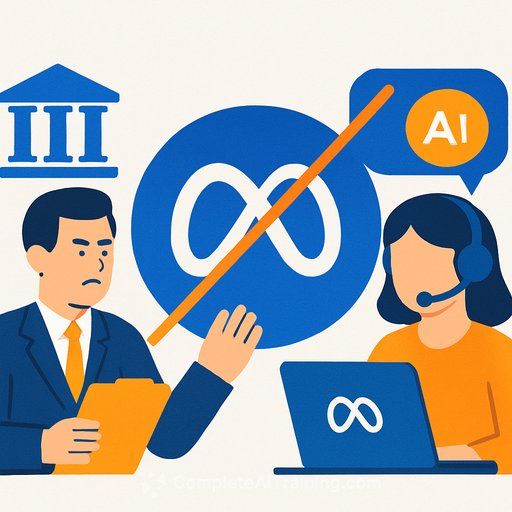
Meta refused to share its new AI assistant Muse for joint testing with the UK's financial regulator ahead of the product's British launch on Tuesday, prompting a warning from the Financial Conduct Authority about "another force of attack" from autonomous agents entering the market.
Colin Payne, the FCA's head of innovation, said the regulator had proposed using its digital sandbox to examine how Muse interacts with consumers. Meta declined. "It's another force of attack, agents hitting the streets, most of them coming from the US," Payne told a panel hosted by AI firm Whitespace on Tuesday.
The standoff comes as multiple UK watchdogs - including the Competition and Markets Authority and the Information Commissioner's Office - have warned Meta it must ensure its AI products comply with British consumer protection laws. The CMA has already forced Meta to adapt its terms and conditions for UK users, requiring the company to exercise "reasonable skill and care/professional diligence" when providing Muse.
Regulatory concerns over autonomous payments
The FCA's interest centers on how Muse will handle payments. Several major British retailers - Sainsbury's, Marks & Spencer, Ocado, Debenhams Group, and Currys - confirmed they have been working with Meta to smooth Muse's access to their websites. Payne said he wants to understand what happens when an AI agent acts on a user's behalf, particularly when that user has limited understanding of how the technology works.
"If an agent is acting autonomously, we want to make sure it's in the interest of the consumer," Payne said. He acknowledged that joint testing would normally require weeks or months of planning, but noted Meta only informed the FCA of its rollout plans last month.
Meta spokesperson Matthew Pollard told WIRED: "We've engaged constructively with the appropriate regulatory authorities and will continue to do so."
Rapid adoption raises stakes
More than 10 million users have set up Muse in North America since its September launch. British regulators expect significant uptake given the existing user base for Meta's other products - Instagram, Facebook, and WhatsApp. "If it's going to be equally popular in the UK, we need to be able to see what it's going to do," Payne said.
The ICO emphasized that users must understand and control how Muse uses their personal data. The CMA's amended terms for UK consumers acknowledge that Muse's outputs "may still be inaccurate and actions may not be completed as intended." The authority said in a statement: "If we have concerns, we will not hesitate to act to protect UK consumers."
For professionals working in compliance, legal, and financial services roles, the FCA's push for sandbox testing reflects a growing expectation that firms proactively demonstrate how AI tools behave before they reach consumers. The regulator has been experimenting with other companies as Amazon and others roll out AI shopping assistants and agentic tools in the UK. Understanding these testing frameworks is becoming essential for teams managing AI governance, and structured learning paths like AI Regulatory Compliance Courses can help specialists navigate evolving oversight requirements.
Why this matters for customer-facing professionals
The Muse rollout signals a shift in how consumers will interact with businesses - through AI intermediaries that browse, compare, and transact on their behalf. For professionals in customer support, sales, marketing, and product development, this changes the nature of the customer relationship. If an agent is making purchasing decisions autonomously, the traditional sales funnel and support interaction become less relevant. Teams will need to design experiences that work for both human users and the AI agents acting for them. The CMA's requirement for "professional diligence" also sets a precedent: companies deploying agentic AI may face liability when those agents make mistakes, even if the fine print warns of inaccuracies.