
AI news ·
MPs and Lords call for new law to tackle AI human rights threats
A cross-party parliamentary committee is urging a dedicated AI law, warning in a 100-page report that no country's current rules can handle the technology's risks.
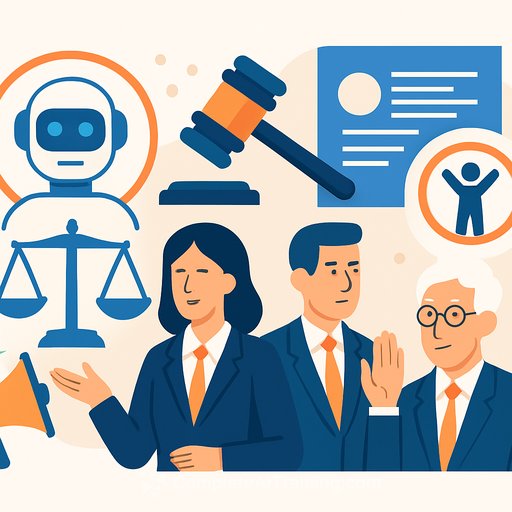
A cross-party group of MPs and peers has called for a new law to address what it describes as serious human rights risks posed by artificial intelligence, arguing existing legislation cannot keep pace with the technology's growth.
The Joint Committee on Human Rights (JCHR) published a 100-page report on Monday urging the government to introduce a dedicated AI bill. It cited examples of harm including AI-generated sexualised images of women and girls and facial scanning conducted without consent.
"Nowhere in the world, including the UK, has a current legislative and regulatory approach to AI that is fit for purpose," said Labour MP and committee chair Alex Sobel.
A fragmented legal framework
The committee said the current regulatory landscape is "fragmented and difficult to navigate", leaving gaps in protection. It called for a single, independent AI oversight body established on a statutory basis, with more demanding obligations for higher-risk AI systems across all stages of the AI lifecycle.
The report went further on certain applications. "Some uses of AI should be prohibited outright because they are incompatible with human rights," it said, pointing to subliminal techniques and inappropriate use of profiling or biometric data as areas for potential action.
Sobel said the technology is "moving with such speed and complexity that its impact is hard to accurately predict", adding: "What is clear is that at present we are unprepared to deal with its consequences however potentially dire they may be."
For public sector teams working through these questions, AI for Government training resources cover the regulatory and human rights dimensions of deploying AI systems. The JCHR's 12 members are drawn from both Houses of Parliament and include MPs and peers from Labour, the Conservative and Liberal Democrat parties.
Government response and legislative timeline
Labour's 2024 general election manifesto promised "binding regulation on the handful of companies developing the most powerful AI models". The King's Speech in July 2024 committed to bringing forward "appropriate legislation", but no dedicated AI bill appeared in this year's King's Speech.
Asked about the missing legislation, education minister Georgia Gould told BBC Breakfast that the government "has been regulating", citing action on non-consensual sexualised deepfakes and a bill linked to cyber security. She said the AI Security Institute is testing models as they enter the UK and that international cooperation is needed.
Following his arrival in No 10 in July, Prime Minister Andy Burnham ensured AI Minister Kanishka Narayan would attend cabinet meetings after scrapping the Department for Science, Innovation and Technology and splitting its responsibilities among other departments.
For those involved in shaping legislation or departmental AI policy, AI for Policy Makers offers structured guidance on the regulatory questions raised by the committee's report.
Wider concerns from industry
The report lands amid growing anxiety from within the AI industry itself. Jacob Coxon, an AI researcher who quit Anthropic, told the BBC this weekend that staff developing the systems were "genuinely frightened" for the future of humanity. An Anthropic spokesperson said the company was building "models with some of the strongest safeguards in the industry".
On Saturday, Anthropic's head Dario Amodei proposed a plan calling for global regulation, industry-wide oversight and independent monitoring of AI models as they are developed. He also urged the pace of development to be slowed. Sam Altman of OpenAI and Elon Musk said they agreed with him.
The JCHR report also highlighted two long-standing concerns: AI systems can display biases against particular groups when trained on internet-scraped datasets containing racist, sexist or other harmful material, and the technology can be used to create and spread misinformation at scale.
Why this matters for government professionals
The committee's core finding - that no country has a regulatory regime fit for purpose - means policy teams should expect AI oversight to remain a live legislative issue through this parliament. The gap between Labour's manifesto commitment to binding regulation and the absence of a dedicated bill creates uncertainty that departments will need to manage when procuring or deploying AI systems. Officials working on AI projects should track the JCHR's proposed prohibitions and oversight body closely, as they signal where future compliance obligations are likely to land.