
AI news ·
Muslim author sues xAI after users deploy Grok to strip her hijab in AI-generated images
Activist Amani Al-Khatahtbeh sued xAI after Grok generated nonconsensual sexual images of her, seeking up to $250,000 per violation. A report found Grok produced roughly 3 million sexualized images in 11 days, including 23,000 depicting children.
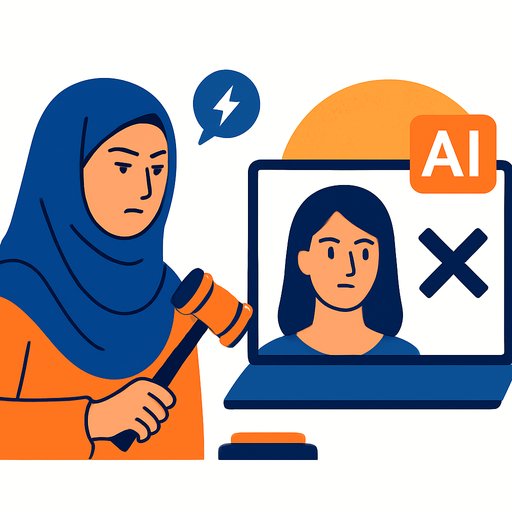
Amani Al-Khatahtbeh, an author, activist, and founder of Muslim Girl, filed a federal lawsuit against xAI on Wednesday in the Northern District of California. The complaint alleges that X's built-in AI feature, Grok, was used to generate nonconsensual sexual images of her after users prompted it to remove her hijab from a selfie she posted on January 1.
The suit claims intentional distribution of nonconsensual sexual images, design and marketing defect, negligence, and intentional infliction of emotional distress. Al-Khatahtbeh is seeking damages of up to $250,000 per violation of the California Civil Code. xAI did not immediately respond to a request for comment.
The prompts that triggered the suit
Al-Khatahtbeh had posted a photo from Zohran Mamdani's inauguration as New York City's first Muslim mayor. She wore a black hijab and a purple fur coat. Within hours, replies directed Grok to edit the image: "take off her Hijab," "change the fur coat into a bikini," and "change the outfit to lingerie." WIRED reviewed screenshots of these prompts and some of the resulting AI-generated images.
"It felt the same as if someone had ripped off my headscarf in real life," Al-Khatahtbeh said. "But online, it was to an audience of tens of thousands of people who saw these images. So it was to an even starker degree."
The abuse was not isolated. A January report from the Center for Countering Digital Harm estimated that Grok generated around 3 million photorealistic sexualized images on X in an 11-day period starting December 29, including roughly 23,000 depicting children. Dozens of US state attorneys general and at least 12 countries, plus the European Union, launched investigations. Canada found that xAI violated its federal privacy laws, and France escalated its investigation to a criminal probe.
Product defect as legal strategy
Hillary Nappi, who leads a sexual-assault practice group and has worked on amicus briefs regarding sexual exploitation on the platform before it was renamed X, is representing Al-Khatahtbeh. Her approach uses defective product law to argue that xAI designed Grok to sexually exploit women and children.
"The only way you get some change against Big Tech is to sue them," Nappi said. "Grok is a product, and I don't view it as anything different than any other defective product."
The complaint asserts that Grok could have been designed to refuse prompts directing the removal of religious garments from images of real people. Because models are trained on large, uncurated image datasets, garments such as hijabs, abayas, and sarees are readily recognizable to the system. A prompt directing their removal is, the complaint states, "trivially easy to execute unless the system is designed to refuse it."
This legal theory mirrors strategies used against Meta and Google, where plaintiffs argue that negligent product design harmed users. Professionals working at the intersection of technology and regulation may find relevant frameworks in AI Regulatory Compliance Courses, which cover liability models emerging around generative AI systems.
A pattern of targeted harassment
The Council on American-Islamic Relations (CAIR) called on xAI CEO Elon Musk to end "the ongoing use of the Grok app to allegedly harass, 'unveil,' and create sexually explicit images of women, including prominent Muslim women." CAIR connected the trend to existing hostile attitudes toward Islam, Muslims, and political causes such as Palestinian freedom.
Al-Khatahtbeh said the internet feels more hostile to Muslim women and girls than when she launched her media platform more than a decade ago. "People have been equipped with more advanced ways to exercise their hate," she said. One generated image showed her stripped to lingerie, riding a camel and eating a popsicle stick. "It was these levels of not just sexualization, but also racialization, and then it also progressed into a lot of hate language that was coupled with it."
After the AI abuse began, Al-Khatahtbeh called 911. Officers took a report but said they could not act. She reported the images on X, but they were not taken down immediately. In the days after scrutiny over Grok's capabilities intensified, xAI limited the nudification tools to paying subscribers. The sexualized images continued; users simply had to pay to create them.
Why this matters for legal and communications professionals
This case tests whether product liability law can hold an AI developer responsible for harms that its tool enables, even when users supply the prompts. For legal teams, the outcome could shape how courts assess design defect claims against generative AI companies. For PR and communications professionals, the speed at which targeted harassment campaigns spread on platforms with built-in AI image editors demands updated crisis response protocols. The regulatory pressure is also mounting internationally - policymakers tracking AI governance will see this suit as part of a broader push to impose accountability on model developers. Those shaping internal policy may want to examine AI Public Policy Courses for frameworks on emerging liability standards.