
AI news ·
Nearly a third of American adults now use AI chatbots for health advice
29% of American adults now use AI tools for health information monthly, nearly double the rate from two years ago, per KFF data. Patients are arriving with chatbot-generated diagnoses and appeal language, reshaping how insurance disputes and coverage decisions are handled.
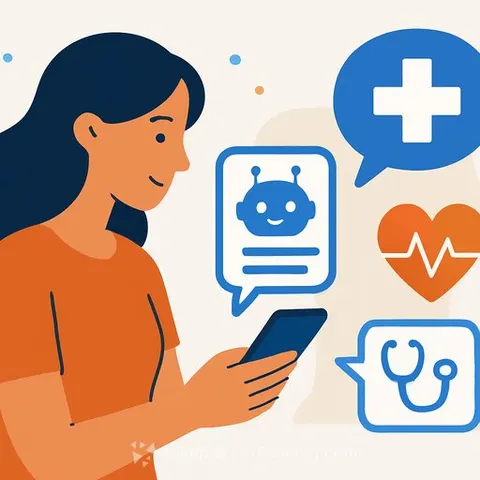
About 29% of American adults now use AI tools or chatbots for health information each month - nearly double the number from two years ago, according to June survey data from the health research firm KFF. The trend is reshaping how patients research symptoms, appeal insurance denials, and decide whether to seek medical care.
For people working in insurance, the shift carries real implications. Patients are arriving at conversations with AI-generated diagnoses, treatment plans, and even appeal language. Some are using chatbots to navigate coverage disputes that previously required hours on the phone.
Patients turn to chatbots first
While traveling, Peggy Dahl developed a cough so bad it left her gasping for breath after each bout. Far from her doctor, and with a sneaking suspicion of bronchitis, she turned to ChatGPT. The chatbot ruled out bronchitis and urged her to find a professional. An X-ray at a nearby urgent care soon confirmed a case of pneumonia.
"It was really good," Dahl said. "It just talks to you like your best friend."
Medical experts see both helpful and harmful outcomes from AI in consumer health. A health chatbot could provide clarity and more individualized guidance to patients. However, early research suggests an overreliance on AI could pose privacy risks or prevent people from seeking care when needed.
"There've been many technological innovations in health care in the last few decades, but this is by far the fastest adoption of anything I've seen," said Dr. Andrew Olson, a physician and professor at the University of Minnesota who has studied artificial intelligence in health care.
AI in the exam room and the claims process
A decade ago, Olson said, patients were searching for symptoms on Google. Now, he sees AI tools loaded on their personal devices in the exam room. Tech companies are looking to cash in. Earlier this year, OpenAI and Amazon both launched health-focused chatbot features for uploading medical records, test results and fitness tracker data. In June, Microsoft announced a partnership with the Mayo Clinic to develop its own health-focused AI product.
Those AI models can be "empowering" when they distill dense medical data to provide accurate personalized information, triage new injuries and clarify obscure medical terms, said Martin Michalowski, an AI-focused researcher at the University of Minnesota's School of Nursing. But he's wary of the limitations: models like ChatGPT work by predicting the most likely next words in a sentence based on the texts used to train them, not by holistically generating knowledge about a topic.
The medical results so far have been mixed. One study testing OpenAI's ChatGPT Health model found it underdiagnosed emergency cases about half the time. Last month, a Florida pastor sued OpenAI, claiming ChatGPT led him to delay care for a critical blood clot in his lungs.
Olson shares the concern that patients might blindly trust tools not designed for health care. He's wary of bias in chatbots that agree with whatever a user suggests, even if it's not medically accurate.
"I think we should encourage people to advocate for their own health," Olson said. "You should look stuff up. And then you should talk about it with your health care provider."
Patients using AI to navigate coverage and costs
Woodbury, Minnesota, resident Leigh Ann Ahmad, 51, turned to AI when she felt her optometrist dismissed symptoms of a growing blind spot in her eye. ChatGPT's triaging encouraged her to return with recommended follow-up questions. Her optometrist referred her to a specialist, who eventually diagnosed her with a long-hidden nerve disorder in her eye.
Then she faced a new problem: a $5,000 bill for follow-up imaging her doctor recommended, but her insurance refused to cover. ChatGPT helped her find the right words. Based on its instructions, Ahmad asked the insurance agent about initiating an "appeal process." Something clicked: the insurance agent called her doctor's office to seek authorization, and the bill disappeared.
"When I used that (language) in the call with my insurance company, it was like night and day," Ahmad said. "I never had to fill out another form, or had to get another bill outstanding, or make another call."
After Henry Dorgan slipped on a spot of water in his bathroom and hyperextended his knee, he thought about making a doctor's appointment. Instead, he wrote a detailed message to Microsoft's Copilot AI chatbot, offering his height, weight, injury description and pain levels. Copilot shot back a possible diagnosis: a grade 1 patellar tendon strain, along with a physical therapy plan.
"It was extraordinarily descriptive," Dorgan said. "I probably saved hundreds of dollars in medical costs."
Lawyer Marc Berris started feeling brain fog and thought his clinical depression was getting worse. An AI tool flagged that topiramate, a drug he'd been prescribed for weight loss, can cause brain fog as a side effect. He brought the theory to his primary care physician, who helped him swap medications. Soon after, the brain fog lifted.
"What I think [AI] is doing is creating more informed patients," Berris said. "Even if the information that I get through an AI tool is not spot-on, it's at least getting me to ask the right questions of my providers."
Why this matters for insurance professionals
Patients are using AI to challenge coverage decisions, dispute bills, and find the exact terminology that triggers an appeal process. That means more policyholders will arrive with specific questions about prior authorization, appeals timelines, and coverage rationale - sometimes with chatbot-generated answers already in hand.
Insurance professionals who understand how these tools work can respond more effectively. Knowing that AI may produce confident but inaccurate answers helps when evaluating a policyholder's claim. And recognizing that patients increasingly rely on AI for AI for Healthcare guidance means clear communication about coverage rules matters more than ever.
For those working in claims and customer service, the practical takeaway is straightforward: expect more AI-informed inquiries and prepare responses that address both the medical and administrative sides of the question. The same applies to AI for Insurance workflows - understanding how chatbots present coverage information helps professionals spot gaps between what a policyholder was told and what their plan actually covers.