
AI news ·
New Jersey public defenders launch custom AI platform to streamline brief drafting
New Jersey's public defender agency launched a custom AI platform to cut legal research from hours to seconds, giving its 1,300 staff access to 3,000 briefs and 200 documents. Built with Princeton, the system automates routine work while keeping attorneys responsible for analysis and strategy.
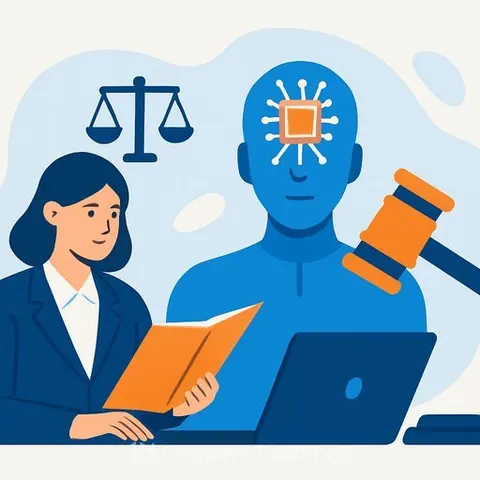
The New Jersey Office of the Public Defender has launched a secure, proprietary AI platform designed to help its attorneys draft legal briefs faster. Built through a partnership with Princeton University, the New Jersey Innovation Authority, and the New Jersey Office of Information Technology, the OPD Resource Library lets public defenders search thousands of past briefs, motions, and training materials from one system. The goal is to cut hours of routine legal research down to seconds, giving attorneys more time for client work.
Before the platform, attorneys had to piece together drafts manually from documents scattered across the agency's servers and databases. Public Defender Jennifer Sellitti called the old process "Frankenbriefing." Now, the system surfaces relevant sections from expert-vetted briefs and provides AI-generated summaries, with the original PDF and the specific section highlighted for verification.
"So much of the fear around AI is that it's going to take over and it's going to make us less human," Sellitti said. "But, the more we automate the mundane tasks and the more we automate processes that are going on behind the scenes and are just super time-consuming for everybody - support staff, investigators and attorneys - that time is going to come back as creativity, one-on-one client experiences, and with lawyers that feel like they can breathe and do their jobs."
Why build a custom tool
NJOPD is one of the largest public defense systems in the nation, with 1,300 attorneys, investigators, social workers, and professional staff across 66 offices serving all 21 counties. The agency handles more than 100,000 cases annually across criminal, juvenile, family, mental health, and appellate divisions.
When Sellitti began exploring AI adoption in 2024, she connected with the New Jersey State Office of Innovation and then-Chief Innovation Officer Beth Noveck. Princeton professor Peter Henderson and postdoctoral researcher Dominik Stammbach studied the agency's workflows and stress-tested commercial AI systems. They found off-the-shelf tools weren't designed for the language, legal reasoning, search needs, or security requirements of public defense work.
That led to building a customized tool. The OPD Resource Library functions as an AI-enhanced search engine for legal briefs, allowing users to search using plain-language questions. It draws from an internal library of 3,000 briefs, 200 internal documents, and 350 directives. All data stays within state-managed infrastructure to protect confidential client files.
Attorneys remain responsible for the legal analysis, writing, and case strategy, according to Sellitti. "The message is always you still have to do the thinking," she said. "You still have to watch the discovery. You still have to read the discovery. You still have to do all of those things and you're still responsible for the work."
For legal professionals weighing similar tools, the distinction matters. The platform accelerates the research phase but doesn't replace judgment. Sellitti compared it to working with a fast intern: read what it produces, verify it, and make it your own before filing.
Beyond the brief bank
NJOPD is also piloting AI tools to help investigators and support staff with organizing discovery, building timelines, summarizing documents, and tracking case needs. Attorneys are using AI-assisted research tools within secure commercial databases like Westlaw to analyze case law and verify citations.
The agency restructured some roles to support the rollout. Secretarial positions were converted into IT liaison roles, allowing staff to move into a different civil service track with higher pay while staying in their offices to train attorneys and troubleshoot the new tools.
"AI isn't just changing the way individuals are doing their work … it's going to fundamentally transform the way organizations do business," Sellitti said. "We believe in our people. We're not going to let people go because a portion of their job is done. We have to reconfigure what their job is."
Sellitti also sees AI fluency as a defensive necessity. "The more my lawyers know about AI and the better that they can use it in their daily life, the better they're going to be at spotting bad AI when it's coming into court against their client," she said, pointing to risks like AI-tampered forensic evidence.
Why this matters for legal professionals
The NJOPD model shows what's possible when a public agency builds AI tools around its own workflow and security requirements rather than forcing commercial products into place. For attorneys in private practice, the lesson is that AI can handle document assembly and initial research, but the lawyer's job - reading the source material, verifying the output, and owning the strategy - doesn't change. Legal professionals who learn to direct AI tools effectively will spend less time on grunt work and more on the analysis that actually serves clients. Those who ignore the shift risk falling behind, particularly solo practitioners and small firms that can't afford enterprise-grade systems.