
AI news ·
New reactions API for managed deep agents helps developers build better loading states
Managed Deep Agents v0.9 adds a reactions API for Slack agents to show loading states and acknowledgment receipts. Developers can wire reactions to a decision model that picks from a curated emoji vocabulary, with a fallback if confidence drops below 25%.
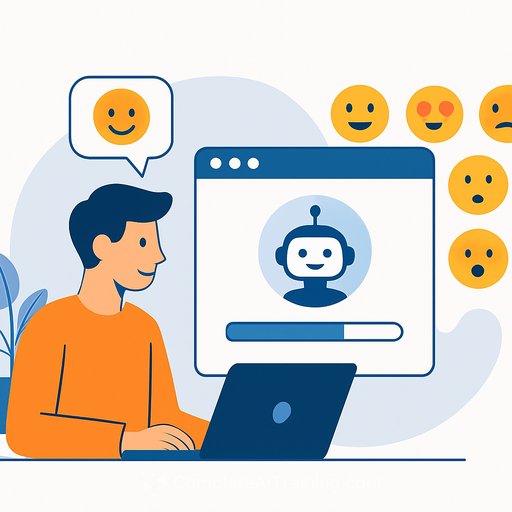
Managed Deep Agents now includes a reactions API that lets developers build visible loading states and acknowledgment receipts into Slack-based agents. The feature, released in v0.9, addresses a persistent design gap in agent user experience: users need to see that a task has been received and is in progress, especially for agents that run long operations like video generation or content creation.
"Loading states are one of the most underrated (and forgotten) design aspects when building effective agent user experiences," the LangChain team said. "Users trust agents when they have visibility into what these agents are actually doing."
The new reactions attribute accepts either a static emoji string or a callable that returns one dynamically. A simple implementation might default to an eyes emoji but switch to a bug emoji when a message contains the word "broken." The real power comes from wiring reactions to decision models that choose from a curated vocabulary of emojis based on the context of each incoming message.
How the emoji vocabulary works
Developers define a set of emojis paired with situation descriptions, not visual descriptions. The decision model matches on the description of the situation, so the same emoji can carry different meanings depending on the agent. A fire emoji from an on-call agent signals a production incident. The same emoji from a growth agent means a campaign is performing well.
The system supports confidence thresholds. If the decision model is less than 25% confident in its top pick, the agent falls back to a generic reaction like the eyes emoji. Developers can also fall back to no reaction when none of the vocabulary entries fit the message.
Custom emojis and design thinking
Teams can add custom emojis to their vocabulary using Slack shortcodes. The applied AI team at LangChain built a set of custom emojis for their internal content agent, including one the agent selects when instructed to write content. This approach treats emoji reactions as a subtle design interface rather than a decorative afterthought.
The same design thinking draws from skeuomorphic UI patterns. The Domino's Pizza Tracker is cited as an example of how digital loading states - even ones that may not reflect exact backend progress - make user experiences more understandable and effective. Agent reactions serve a similar purpose, giving users acknowledgment that work is underway.
Why this matters for customer support and operations teams
For support agents, visible reactions reduce the anxiety of sending a message into a void. A user who reports a bug and immediately sees a bug emoji reaction knows the agent interpreted the message correctly before the full response arrives. Operations teams running incident-response agents can use reactions to signal severity at a glance, helping on-call staff triage without opening every thread. The API works with existing Managed Deep Agents and requires minimal code to add these acknowledgment patterns to any Slack-based agent workflow.