
AI news ·
New York governor signs law banning AI chatbot toys for five years
New York will ban the manufacture and sale of AI chatbot toys for five years starting Feb. 22, 2027, with civil penalties up to $15,000 per day per violation.
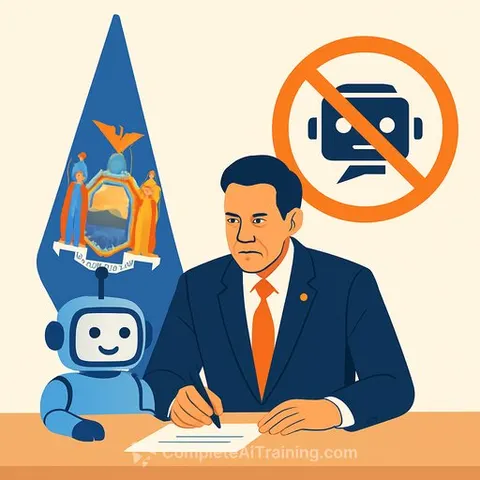
New York will prohibit the manufacture and sale of AI chatbot toys for five years under a law Gov. Kathy Hochul signed Nov. 24. The ban takes effect Feb. 22, 2027 and carries civil penalties of up to $15,000 per day for each violation - a figure that could reach $450,000 for a single 30-day infraction. The law targets a growing category of internet-connected toys that hold real-time conversations with children, and it gives companies just over a year to adjust product lines before enforcement begins.
The measure, Chapter 416 of the Laws of 2026, adds a new article to the General Business Law barring anyone from manufacturing, distributing, or selling toys with a built-in AI chatbot. That includes talking stuffed animals, dolls, and robots that use the internet to converse with children. Sen. Andrew Gounardes, a Brooklyn Democrat, and Assemblymember Rebecca Kassay sponsored the bill. It passed the Senate 57-3 on June 1 and cleared the Assembly the next day before sitting on the governor's desk for nearly six months.
"AI-powered toys are a Twilight Zone episode come to life," Gounardes said in a June 2026 statement after the Senate vote.
What the statute actually covers
The law defines a chatbot toy as a children's toy with an "AI companion" embedded in or integrated with it. "AI companion" takes its meaning from section 1700 of the General Business Law, and "children's toy" points to the federal definition at 15 U.S.C. § 2057c(g). News10 reported before the signing that the ban reaches toys aimed at children 12 and younger. The prohibition covers five commercial acts: manufacturing, exchanging, holding for sale, distributing, and selling. It says nothing about owning or using a toy a family already has. No exemptions appear in the text.
The law is a pause, not a permanent ban. It repeals itself five years after taking effect, which points to February 2032 unless lawmakers act sooner. Only products that embed or integrate an AI companion are covered - it does not reach every smart toy on the market.
Enforcement rests with the attorney general
Attorney General Letitia James's office is the sole enforcer named in the statute. The attorney general can sue in the state's name, seek an injunction, and ask for civil penalties of up to $15,000 per day for each violation. The state does not need to prove a child was harmed. A court can order preliminary relief under Article 63 of the civil practice law and rules. The $15,000 figure is a ceiling - a judge would set the actual amount in each case.
Why lawmakers chose a halt over new safety rules
The governor's announcement cited consumer testing of chatbot toys marketed to children ages 3 to 12. Some toys discussed sexually explicit subjects, told a child where to find matches, or seemed upset when a child left. Parental controls were scarce, safety limits weakened over longer conversations, and some products could record voices or scan faces. Gounardes said a temporary halt would let experts study the effect on children and design protections first. He flagged particular risk for children under 5, who may not yet distinguish an AI from a person, and cited Common Sense Media's finding that nearly two-thirds of parents worry AI toys will cut into time with friends and family.
The original March bill directed state agencies to study chatbot toys and report within four years. That study provision does not appear in the signed text, which has three sections: definitions, the prohibition, and enforcement. Extending or replacing the ban would require a new bill.
The national picture
California moved first. Gov. Gavin Newsom signed SB 867 on Sept. 10, creating a four-year moratorium that begins Jan. 1, 2027. It covers toys for children under 16 that contain a companion chatbot as California law defines it. Hochul also signed a separate measure Oct. 28 that bars chatbot companies from offering certain features to New Yorkers until they confirm a user is at least 18.
"…time to assess these emerging technologies and develop meaningful regulations," Kassay said in the governor's announcement.
Why this matters for product developers and legal teams
Companies making or selling AI-enabled toys in New York have until Feb. 22, 2027 to audit their products against the statute's definitions. The absence of a study provision in the final text means the regulatory picture will not clarify itself - any extension, replacement, or permanent ban will require new legislation, and the attorney general's enforcement approach remains unwritten. Product teams should watch for guidance from the AG's office before the start date, and legal teams should track whether any court challenge emerges. For professionals working at the intersection of AI and regulated consumer products, the New York and California pauses signal that state-level action is moving faster than federal rulemaking - a pattern that will shape compliance calendars for years. Professionals tracking these shifts can build relevant expertise through AI Regulatory Compliance Courses or AI Public Policy Courses designed for the regulatory and policy demands these laws create.