
AI news ·
New York state senator introduces bill to ban AI humanoid robots from teaching in schools
New York bill S.10671 would ban humanoid robots from teaching in public schools. It follows a district plan to use a robot designed to look 16 to 24 years old.
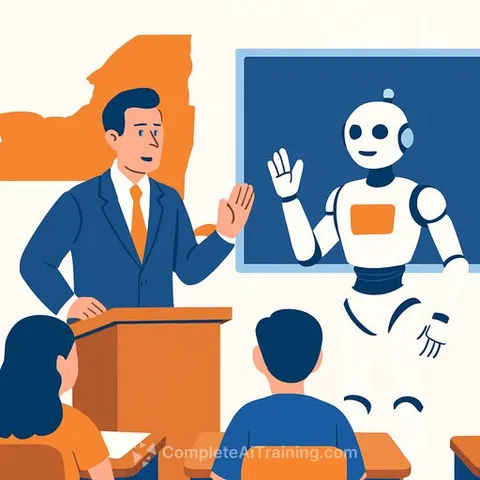
New York State Senator Shelley Mayer, chair of the Senate Education Committee, introduced legislation Thursday that would ban AI-enabled humanoid robots from performing any teaching duties in public schools. The bill, S.10671, responds directly to a plan by the Salamanca City Central School District to pilot a humanoid robot named "Sally" as a classroom tutoring aide, and it arrives as districts nationwide weigh how far to let AI into daily instruction.
The "Sally" robot pilot that sparked the bill
Salamanca had partnered with Realbotix to deploy a robot designed to look between 16 and 24 years old, with a positive personality and knowledge of local history. The district proposed using it to interact with students, explain lessons, assist with assignments, and offer personalized support. On July 24, State Education Commissioner Betty Rosa wrote to Superintendent Mark Beehler that the department remained "concerned about the effect that a humanoid robot may have within a high school classroom." Rosa noted that many parents and teachers are "understandably concerned about the presence of Artificial Intelligence (AI) technology in classrooms, particularly when it involves robots that resemble humans." Later that same day, Salamanca announced it was putting the pilot on hold to work through stronger data privacy agreements and to continue engaging with the community.
What the bill would prohibit
Senator Mayer's legislation would require every school district, charter school, and BOCES to adopt a written policy that explicitly bans humanoid robots from roles typically held by certified teachers. The prohibited activities include delivering or leading classroom instruction, providing one-on-one or small-group tutoring, offering educational support services, assessing or grading student work, and any other duties ordinarily performed by a teacher. The bill does not block all uses of AI-it draws a line around robots that mimic human appearance and interaction in an instructional capacity.
Reactions from education leaders
"Humanoid AI robots designed to look and interact like people present unique concerns in schools, not the least of which is the impact on children," Senator Mayer said. "These systems have the potential to foster inappropriate emotional attachments or relationships with students, and like any technology, cannot be used to replace the human interaction that is so critical to intellectual, social and age-appropriate development."
Senator Kristen Gonzalez, chair of the Internet and Technology Committee, added: "Before any new technology is introduced in educational settings, it should have evidence-backed and clear guidelines on how to achieve learning objectives. AI-powered humanoid robots lack any research and raise serious concerns about how these devices could impact the social and emotional development of children."
NYSUT President Melinda Person and NYS PTA President Patty Frazier both backed the bill, with Person thanking Mayer for acting quickly to "create statewide guardrails so districts don't become testing grounds for humanoid robots."
Why this matters for teachers and school leaders
The legislation signals that when it comes to AI, New York is prioritizing clear boundaries over experimentation. For educators, the bill reinforces that the role of a teacher is not just about delivering content-it's about mentorship, social-emotional support, and the human judgment that no robot can replicate. At the same time, the bill does not block all AI tools; it leaves room for technology that supports rather than replaces instruction. As schools evaluate AI for tasks like personalized practice or data analysis, structured training becomes essential. Programs such as the AI Learning Path for Teachers help educators integrate AI tools responsibly while keeping human connection at the center of the classroom. For broader policy and integration guidance, the AI for Education resources offer courses and certifications on classroom-ready AI tools and frameworks.