
AI news ·
Ohio governor defers AI regulation to federal government despite Trump's deregulatory stance
Ohio Gov. Mike DeWine will not urge his successor to pursue state AI regulations, insisting oversight must come from the federal government to ensure uniform rules.
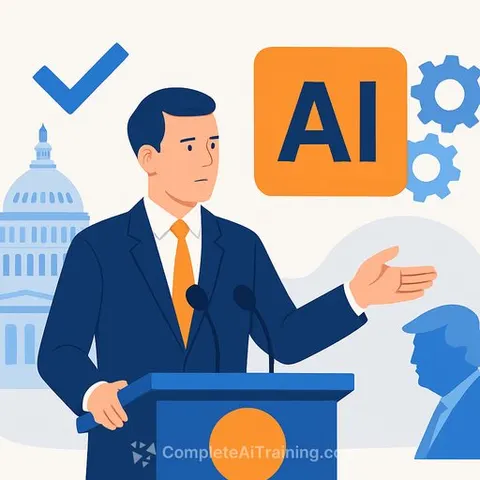
Ohio Gov. Mike DeWine said Tuesday he would not push his successor to pursue state-level artificial intelligence regulations, arguing that AI oversight must come from the federal government to ensure uniform rules across the country and the world. The term-limited governor's position leaves the regulatory future of the technology in the hands of a Congress that has shown little appetite for action and a president who has dismissed AI guardrails as unnecessary.
DeWine, speaking at an event in New Albany, said uniformity is essential. "Look, as far as AI, this really needs to come from the federal government," he said. "We need to have uniformity, not just in this country; we need to have uniformity in the world. So, I would certainly hope we can see some uniformity coming out of Washington."
The governor acknowledged he does not know precisely what that federal framework should look like. He suggested a well-balanced group of experts advising the president would be an "appropriate place to start." DeWine will leave office in January, with Democrat Amy Acton and Republican Vivek Ramaswamy competing to replace him.
Federal posture leans away from regulation
DeWine's comments align with a federal government that has signaled little interest in imposing new AI rules. On Monday, President Donald Trump posted on Truth Social that AI is a "Golden Goose" and called concerns about the technology "hoaxes." He said the only guardrail AI needs is a "STRONG AND SMART (High IQ!) PRESIDENT."
Trump also pointed to competition with China, writing that "WHOEVER WINS AI, WINS!" He said existing laws already allow criminal prosecution of AI leaders who break them, suggesting no new regulatory structure is required.
A call for balance amid global competition
DeWine struck a somewhat different tone than the president by acknowledging the need for balance between development and control. "There are challenges," he said. "We need to control AI, and coming up with the best way to do it is important and it's in every country's interest. We also have to continue to develop; we know what the Chinese are doing."
He emphasized that finding that balance cannot happen at the state level. "It can't be done at the state level… it has to be done universally," DeWine said. The governor did not specify what guardrails he would support, nor did he criticize the White House's current hands-off approach.
Why this matters for government professionals
State and local officials watching for federal direction on AI governance will find no clear signal from Ohio's outgoing governor beyond a preference for Washington-led action. With the executive branch dismissing the need for new rules and Congress showing no momentum on the issue, government professionals working on AI policy, procurement, or implementation should expect the current patchwork of state inaction and voluntary industry standards to persist. Any shift will likely require a change in federal political will, not guidance from state capitols.