
AI news ·
OpenAI countersues Apple for stealing trade secrets
OpenAI countersued Apple on Friday, accusing the iPhone maker of stealing trade secrets and blocking its access to hardware suppliers.
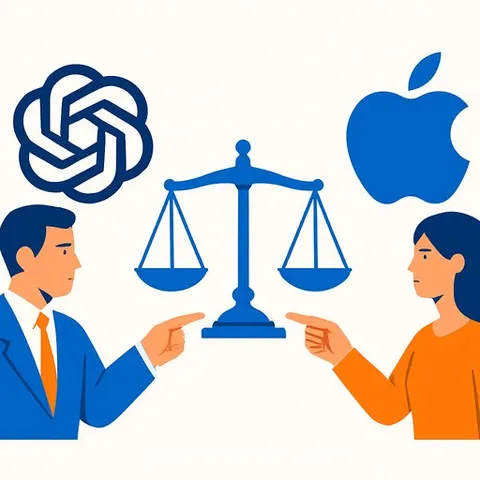
OpenAI filed a countersuit against Apple on Friday, accusing the iPhone maker of stealing trade secrets and interfering with its access to hardware suppliers. The lawsuit, reported by the Financial Times, escalates a legal battle between two of the world's most valuable technology companies as they compete for dominance in artificial intelligence.
The suit was lodged in a California court, according to the FT report. Apple and OpenAI did not immediately respond to requests for comment.
Escalating tensions in the AI arms race
The new filing follows an earlier lawsuit from Apple. Earlier this year, Apple sued OpenAI and two former employees, alleging they misappropriated trade secrets to benefit OpenAI's push into consumer hardware. OpenAI has denied those claims.
The dispute highlights how the intensifying race to build AI products is fueling friction over talent and proprietary technology. Both companies are investing heavily in AI capabilities, with OpenAI's ChatGPT facing off against Apple's growing suite of machine learning features across its devices.
Hardware supply chains under scrutiny
OpenAI's countersuit includes allegations that Apple blocked its access to hardware suppliers, the FT reported. Details of the specific hardware or suppliers involved were not immediately available. The claim points to the strategic importance of physical computing infrastructure-not just software and algorithms-in the current AI competition.
Access to specialized chips and other components has become a critical bottleneck for AI development. Companies that can secure reliable supply chains gain an edge in training and deploying large language models.
Why this matters for legal and strategy professionals
The OpenAI-Apple dispute signals that trade secret litigation will be a central battleground as AI development accelerates. Legal teams should expect more cross-company conflicts over employee mobility and proprietary data. For executives and strategists, the case underscores how hardware access is now a competitive weapon in AI-not merely a procurement concern. Professionals navigating this space may need deeper expertise in AI-specific intellectual property frameworks, which specialized AI Intellectual Property Courses are beginning to address.