
AI news ·
Oracle cuts recruiting research from days to minutes with ChatGPT and Codex
130,000 Oracle employees now use ChatGPT Work and over 95,000 use Codex, slashing tasks that once took days to minutes. Talent acquisition research dropped from 2-4 days to 15-20 minutes per role.
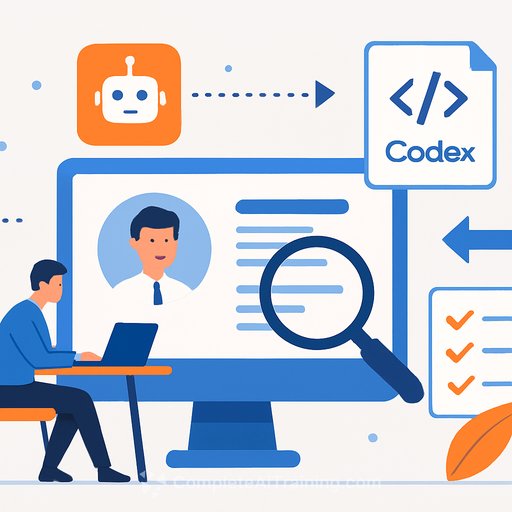
More than 130,000 Oracle employees now use ChatGPT Work, and over 95,000 use Codex, cutting processes that once took days down to minutes. The company has embedded these tools across talent acquisition, business analytics, and production engineering, shifting specialist work into repeatable workflows that non-specialists can run.
Recruiters skip days of market research
The talent acquisition team built a talent market intelligence tool with ChatGPT Work. It takes a job description, researches comparable roles, benchmarks compensation, and assesses the talent pool across locations. "We've gone from zero to a hundred," said Jan Ackerman, Senior Vice President and Global Head of Talent Acquisition at Oracle. "Now we're able to sit down and prep for about 15 to 20 minutes using the tool that we've built using [ChatGPT] Work."
That intake work previously took 2-4 days to compile. Ackerman said the tool arms recruiters with the information they need before a conversation with the hiring manager. The process is also more consistent now. Every hiring manager gets the same quality of data and insights regardless of which recruiter handles the search.
Business users describe outcomes instead of hunting for reports
The Oracle Applications Lab team, which runs many of Oracle's core business processes, built an ontology of the company's objects, relationships, and rules. A business user describes the outcome they want in plain language, and Codex turns that into a reliable SQL query, decides which internal systems to call, and returns an analysis, report, or application.
Richard Lam, Group Vice President of Oracle Applications Lab, described a user who asked a question that would normally take a couple of hours to answer. "With the new tool, I put in the request and got a response almost immediately," she told Lam. When she checked the result against the old manual process, the numbers matched exactly. "Business users now describe the outcome they want instead of hunting for a report," Lam said. "That is a major shift. I would even call it a business transformation."
In production engineering, site reliability engineers use Codex to gather context about an incident and automatically pull up the right playbook. A simple incident that used to take an hour can now be handled in minutes. Lam stressed that none of this runs on autopilot. Someone still has to make sure the underlying system is built correctly.
Leadership lessons from the rollout
Oracle leaders pointed to a few principles that shaped adoption. Lam emphasized guardrails: "You have to still be very responsible about your system design, your architecture, your security, and how you would like Codex to structure the code for you."
Barry Shilmover, Vice President and Technical Advisor to the CIO, said he now puts ideas into a prototype rather than on paper. Lam added that developers must own the code they produce with AI. "If you don't work alongside Codex, you're going to get into a situation of having lots of code that is not going to be maintainable."
Why this matters for operations and IT leaders
Oracle's deployment shows what happens when enterprise AI tools are given to tens of thousands of employees with clear boundaries rather than open-ended access. The productivity gains are specific and measurable: a 98% drop in talent acquisition research time, incidents resolved in minutes instead of hours. For operations and IT leaders, the takeaway is that the ROI comes from wiring AI into existing workflows with defined inputs and outputs - not from giving everyone a chatbot and hoping for the best. The guardrails Lam describes around system design and code ownership are what keep the output reliable when the work accelerates.
For teams building similar internal tools, AI productivity courses offer structured approaches to applying these patterns without sacrificing maintainability.