
AI news ·
Pakistani screenwriter Syed Mohammed Ahmed quits screenwriting over script changes and artificial intelligence use
Syed Mohammed Ahmed quit Pakistani TV after producers cut his 17-episode draft. He cited a rise in AI-generated 26-episode scripts lacking cultural edits.
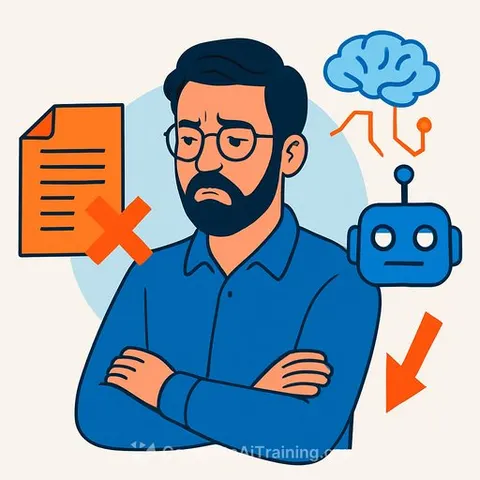
Veteran Pakistani screenwriter and actor Syed Mohammed Ahmed has stepped away from television writing, citing producers who rewrite his work to chase viral trends and an industry that now tolerates scripts generated by artificial intelligence. His decision spotlights a widening rift between writers and production houses that prize speed and marketable formulas over original storytelling.
Speaking on Sheeba Khan's podcast Dareecha, Ahmed said the routine altering of scripts has stripped writers of control. "My own serial, that I'd written 17 episodes of, did they not ask me to delete everything past episode 11?" he said. The demand came after he had already completed the full draft.
Ahmed pointed to a growing reliance on AI tools among his peers. Some writers, he said, are delivering 26-episode scripts created with AI, often without editing the dialogue to reflect local speech patterns. "A lot of writers are now writing 26-episode scripts with the help of AI. And you can tell it's with AI, because these writers don't even try to change the dialogue to fit our culture. It's not in the language that we speak because AI just wrote it and gave it to you," Ahmed said.
The practice Ahmed describes-scripts generated by AI with minimal human refinement-is a key topic in the AI Learning Path for Scriptwriters, which examines how the technology is reshaping the field.
Writers lose control over their work
Ahmed acknowledged that he gave producers full permission to alter his scripts, but he framed the issue as a systemic one. "I gave them permission because my thoughts are my own. I can't write as Sheeba, now can I? If, say, Sheeba wanted a particular script from me, how can I write as her, I can write as Mohammed Ahmed. So then I say, 'Sheeba, this is what I've written, now you can tear it apart, do whatever you want to it.' Because if they don't get it even after I've rewritten it, then they can do it themselves."
He contrasted his approach with a broader trend: many writers, knowing their work will be rewritten anyway, put in less effort. "It takes me a good 10 to 11 months to write a single serial, then how are they churning out four serials a day? It's not humanly possible," Ahmed said.
Uncredited labor and the name game
Ahmed also described a shadow system of uncredited work. Writers have students write scripts, or content teams edit AI-generated drafts, but none of those contributors receive acknowledgment. "Because names sell. [Production houses] want so and so to write because their name sells," he said.
Khan asked how writers could allow studios to operate this way. Ahmed replied, "They're desperate, everyone needs to earn money and run their household, I do too, I just decided not to write anymore. I just can't write for them, I don't have it in me… I can't write toxic mothers and daughters-in-law, I just can't."
A script that exposed silence
Ahmed said he wrote a drama on a topic important to women, one that had a strong chance of empowering girls in Pakistani households. The response from producers was telling. "Sheeba, there was such a deafening silence after people heard the script, nobody even responded, that's what our society is. It would have exposed men… This is a secret we've suppressed for so long because we need our daughters-in-law as punching bags."
He predicted that if the script had aired, "men would've cried, mothers-in-law would have cried and these TV channels for sure would have cried." Instead, "all these educated producers, or so-called educated producers, they went silent on it."
Why this matters for writers
Ahmed's exit reflects a pressure point many writers face: the demand to produce quickly while surrendering creative ownership. The rise of AI-generated scripts, often edited by unnamed staff, accelerates this erosion. Writers who push back risk being replaced, while those who comply see their work mangled or their credit diluted.
For writers looking to adapt without losing their voice, resources such as the AI for Writers Courses collection provide practical approaches to working alongside AI tools. The challenge, as Ahmed's experience shows, is not just technical-it is about protecting the writer's role in an industry that increasingly treats scripts as interchangeable content.