
AI news ·
Parents bring AI to IEP meetings as teachers weigh transparency and collaboration
Parents are bringing AI-generated questions and goals to IEP meetings, forcing teachers to respond to documents that can run 20 to 30 pages. The practice helps families decode jargon but raises privacy and disclosure concerns under FERPA and IDEA.
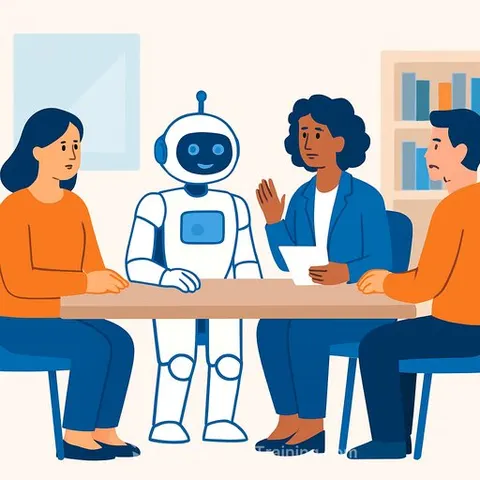
Some parents are bringing AI-generated questions, summaries, and proposed goals to individualized education program meetings, and teachers are figuring out how to respond. The practice can help parents decode dense special education paperwork, but it also raises questions about disclosure, data privacy, and how much time educators spend reviewing AI-produced documents.
Kimberly Morris, who taught pre-K through the 2025-26 school year, saw parents use AI to create home goals that aligned with school IEP objectives. "Some parents would then utilize AI as a way to create a home goal," she said. Morris, now a curriculum and instruction specialist at Unlocking Children's Potential of Central Florida, said she welcomed the approach.
How parents are using AI in the IEP process
Elizabeth Laird, director of equity and civic technology at the Center for Democracy and Technology, said parents turn to AI to understand the process, learn their rights, and identify accommodations worth asking about. "AI can play a role in democratizing access to information about the process itself," she said.
Olivia Coleman, an assistant professor in the School of Teacher Education at the University of Central Florida, said parents use AI to translate jargon and acronyms and to draft questions. "Just because you're a parent of a child with a disability doesn't mean you automatically understand all of these things related to your child's IEP," she said.
Parents are also feeding IEP documents into AI models and asking for plain-language explanations. Coleman sees this as a practical response to a process that produces "a big stack of papers, full of terminology that parents may not understand."
The benefits extend beyond comprehension. Morris said parents who use AI "can become more of a team member alongside the teacher, occupational therapist, physical therapist and speech therapist."
Risks and legal considerations
The practice has downsides. Phyllis Wolfram, executive director of the Council of Administrators of Special Education, said a parent's AI-generated contribution can sprawl to 20 or 30 pages. "It's going to take a teacher the majority of their day just to read through a request," she said. "It will slow down the process."
Laird cautioned that "AI is not an IEP expert" and its outputs can be inaccurate. She said teachers and parents should review AI findings together rather than treating them as settled conclusions.
Privacy is another concern. The Family Educational Rights and Privacy Act and the Individuals with Disabilities Education Act provide protections for student education records. Parents should avoid putting identifiable personal data such as medical diagnoses and legal documents into AI tools, which could train on that data or expose it in a security breach.
Should parents disclose AI use?
Some parents told Morris directly when they used AI to create home goals. "I thought that was really cool, that parents stepped out of their own mindset to think about how to incorporate those goals at home," she said.
Even without disclosure, educators may spot AI-generated text. Wolfram said AI-written submissions are "much lengthier" and carry "legal jargon that doesn't typically come from parents." She added, "Most educators will know when they've received something written by AI."
Coleman said transparency matters because the IEP process depends on trust. "We don't want to pit anyone in the IEP team against each other. We want to work together," she said. "Transparency builds trust."
Parents use AI for several specific tasks, including summarizing IEP documents, verifying rights against state guidelines, translating jargon, formulating proposed goals, and generating questions. Educators say they would prefer parents disclose that use so everyone can stay aligned in what is supposed to be a collaborative process.
Crafting a teacher response
Morris advises teachers to assume some parents will use AI and to keep communication open. "I have created the IEP and I know my role and goals as well as those for the student and parents," she said.
Teachers can model disclosure by being transparent about their own AI use. Coleman suggests saying, "We're not against AI use, but we'd really appreciate you also being transparent, and this is why." She added that teachers cannot make disclosure mandatory, but they can set an example.
Wolfram said a teacher can respond to AI-generated recommendations by asking, "Let's talk about those recommendations. Do you see those as different from what we're already doing? And if so, let's talk about why you think that's needed."
For educators who want to build their own skills with AI in the classroom, AI for Teachers Courses cover practical applications in educational settings. Broader guidance on AI for Education can also help teachers understand the tools parents are bringing to meetings.
Why this matters for educators
Parents are not waiting for schools to set AI policy. They are using these tools now, and the IEP meeting is one place where that use becomes visible. Teachers who prepare for AI-informed parents - by understanding what the tools can and cannot do, and by keeping the conversation collaborative - will spend less time reacting to surprises and more time focused on the student's actual needs. The core question is not whether AI belongs in the IEP process, but how educators and parents can use it without eroding the trust that process requires.