
AI news ·
Patient understanding is essential as OpenEvidence adds 65,000 users a month
80% of UK clinicians support AI in patient care, but only 55% of patients agree. Over 45% of physicians now use the evidence-based platform OpenEvidence.
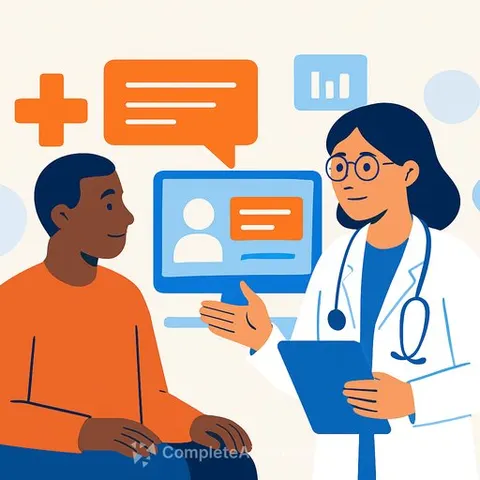
Eighty percent of UK healthcare professionals support using AI in patient care. Only 55% of the public agrees. In the United States, one in four people now use AI tools to supplement a doctor's appointment, according to Gallup. OpenEvidence, founded in 2022 by Canadian tech entrepreneur Daniel Nadler, sits at the center of this widening gap between clinician enthusiasm and patient skepticism. More than 45% of physicians now use the platform, with roughly 65,000 new registrations added each month, according to a 2025 Offcall study.
The trust gap, by the numbers
The Health Foundation's UK data paints a clear picture: healthcare professionals are ready for AI. Patients are not. That 25-percentage-point gap carries real consequences. A patient who watches a doctor consult an unfamiliar tool on screen may reasonably wonder whether the physician is leaning on a generic chatbot rather than clinical judgment. Without direct explanation, doubt fills the silence.
The Gallup findings add another layer. Americans are not waiting for the system to catch up. They are searching symptoms, cross-referencing prescriptions, and forming medical conclusions on their own, often with tools never designed for clinical use. The stakes in medicine are higher than in any other field where consumer AI has gained traction. Misinterpretation can lead to delayed treatment, unnecessary panic, or worse.
A different kind of AI tool
OpenEvidence was built to address the information quality problem at its root. The platform is trained exclusively on peer-reviewed medical research, journals, studies, and clinical evidence. It does not scrape the open web. Responses are not aggregated from a cursory internet search and left to an untrained individual to interpret. Instead, the tool is used by doctors to find, transmit, and apply the best available medical information during a consultation.
This distinction matters for patient confidence. The question "Is my doctor just asking ChatGPT?" has an answer here. OpenEvidence draws from a curated corpus of medical literature, not from the same training data that powers general-purpose chatbots. For healthcare organizations investing in AI for Healthcare, that design choice is the difference between a clinical copilot and a liability.
The streaming analogy
Nadler has compared the technology's development arc to streaming services. Speaking to Fierce Healthcare in 2024, he said "the technology involved in streaming has now been pretty commoditized. These copilots are eventually going to get there, but then you differentiate around content and partnerships." The streaming model is universally understood. Most people know Netflix differs from a random video site because of what it offers and how it licenses content. Nadler's argument is that AI-driven medical technology must reach the same level of public comprehension.
OpenEvidence's growth trajectory suggests the professional market recognizes its value. But the company's next challenge is not engineering. It is communication. The tool must be understood by the people it ultimately serves: patients sitting in exam rooms, watching their doctor type and read, trusting that the information shaping their care is legitimate.
Why this matters for healthcare professionals
The burden of closing the trust gap falls primarily on clinicians. A tool can be accurate, fast, and well-trained, but if a patient does not understand what it is or why it is being used, adoption will stall. Physicians using OpenEvidence or similar platforms need clear, plain-language explanations ready for the moment a patient asks what is happening on the screen. The technology works. The remaining work is to make sure patients know that.