
AI news ·
Pentagon's ban on Anthropic software unravels within a month
The Air Force ordered contractors to purge Anthropic AI from weapons systems by Sept. 1, then reversed course within a month amid NSA objections that a ban would mean "unilateral disarmament" in offensive cyber operations.
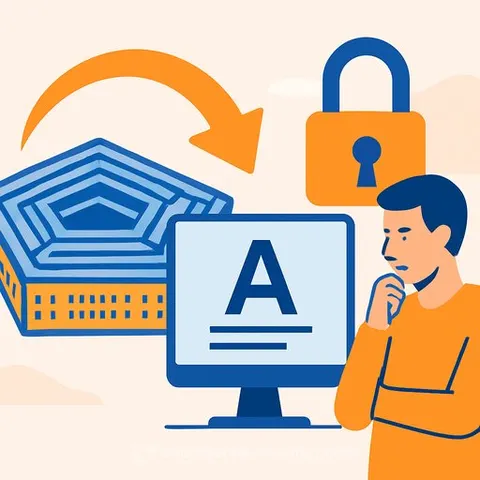
The Air Force sent major military contractors a letter in mid-July with a blunt deadline: By Sept. 1, all software used for weapons and control systems had to be free of products built by the A.I. company Anthropic. Failure to comply, the letter warned, would put all business with the Pentagon at risk.
Within a month, the same contractors received an unexpected reversal. They could disregard the earlier instructions about purging Anthropic, at least for now.
The episode is one example of the chaos and contradictions sweeping the national security establishment as A.I. advances accelerate. Agencies like the Pentagon, which still operates airplanes designed in the 1950s, are struggling to keep pace with A.I. models whose capabilities multiply in a matter of months.
A feud at the top
The tension has been magnified in the case of Anthropic, whose chief executive, Dario Amodei, has been locked in a public feud with Defense Secretary Pete Hegseth over restrictions the company tried to put on the technology's use by the U.S. military.
Senior N.S.A. officials argued that without Anthropic's powerful Mythos model, it would be far more difficult to find and patch vulnerabilities in the Pentagon's own systems. It turned out that, despite the original ban, the N.S.A. was still allowed to use its products.
Critical tests were underway using Mythos to gauge its potential to hack into highly protected foreign networks, current and former officials said. Shutting down the use of Mythos, an A.I. model whose potential for offensive cyberoperations is already shifting the digital arms race, would have amounted to "unilateral disarmament," according to one recently departed senior U.S. official.
An inconsistent policy response
The reversal highlights the wider problem facing Washington: policy responses are veering wildly as China, America's main technological and military rival, charges ahead. The administration's approach to the national security implications of A.I. has been inconsistent, leaving contractors and agencies uncertain about what rules actually apply.
For companies doing business with the Pentagon, the episode raises a practical question. If the Air Force can issue a directive and then retract it within weeks, other agencies may follow the same pattern. Contractors need to track these policy shifts carefully while building systems that may be in use for decades.
Why this matters for government and IT professionals
If you work in government contracting or IT development, this story is a warning about the volatility of A.I. policy at the federal level. The same technology can be banned one month and quietly reinstated the next, depending on which agency's interpretation prevails. The practical takeaway: build your systems with flexibility in mind, and avoid locking your infrastructure to a single A.I. vendor when possible. The rules can change faster than your procurement cycle.