
AI news ·
Public institution evaluation under Lee Jae-myung government puts AI and safety at the center of grading
Fifteen South Korean public agencies earned top grades in 2025 for AI-driven innovation and safety, while seven agency heads face dismissal for poor performance. The new evaluation framework ties institutional survival directly to AI capability and safety outcomes.
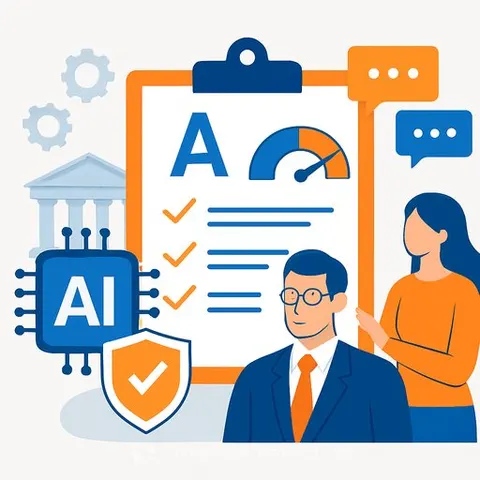
The Lee Jae-myung government applied its first public institution management evaluation in 2025, and the results show a clear shift in how agencies are judged. Fifteen institutions earned Excellent (A) grades based on AI-driven business innovation, safety management, and state agenda execution. Korea Hydro & Nuclear Power developed autonomous driving and image recognition robots for hazardous work, while the Korea Workers' Compensation & Welfare Service deployed an AI system across its entire industrial accident compensation cycle. Sixteen institutions with weak major business performance or poor financial and safety management received Inadequate or below grades (D.E), and seven agency heads were put forward as candidates for dismissal recommendations.
AI and safety capabilities now drive public institution scorecards
The evaluation signals that AI adoption and safety performance have become core criteria for public sector hiring and management. Analysts said the robot development at Korea Hydro & Nuclear Power and the end-to-end AI system at the Workers' Compensation Service were key grounds for the top grades. By contrast, institutions that failed to meet financial or safety benchmarks saw their leadership placed at risk of removal. The government's stance is that carrying out state agendas through technology integration now directly affects institutional survival and executive accountability.
This shift carries weight for government HR and workforce planning. As public institutions embed AI for Government into operational evaluations, hiring panels and internal auditors must now account for digital transformation metrics alongside traditional financial and safety indicators. The evaluation framework effectively ties institutional grade to demonstrated AI capability and safety outcomes.
Foreign worker hiring exposes structural information gaps
Small and medium-sized manufacturers hiring under the Employment Permit System (E-9) said they are forced to select workers based on fragmentary information - facial photos, height, and weight - with no access to skill level or work motivation data. The Korea Labor Institute argued that expanding the scope of information provided to both employers and workers is the starting point for structural improvement. Employers bear the costs of early departures, job transfer demands, and on-site complaints, while workers often arrive without verifying workplace location, work intensity, or housing conditions.
The mismatch creates a system where both sides operate on limited data. Industry observers described the current process as "essentially a matter of luck," with neither party able to make informed decisions before entry. The labor institute's analysis points toward a need for pre-arrival information sharing that would reduce the friction currently absorbed by employers and workers alike. For human resources teams in government-linked agencies that oversee or interact with the Employment Permit System, this structural limitation affects workforce stability and compliance planning. The push for expanded information sharing aligns with broader discussions about AI for Human Resources tools that could help match worker profiles to job requirements more effectively.
Subscription fee management tools launch in September
Starting in September, the government will roll out a service that lets users view and manage OTT, music streaming, and social media subscriptions in one place using financial information. Corrective orders and fines under the E-Commerce Act on "dark patterns" that block subscription cancellation will strengthen, with detailed business guidelines due by September. The plan also includes mandatory display of total subscription costs for major appliances like refrigerators and air conditioners, disclosure of management fee details for studios and officetels, and a new obligation for licensed real estate agents to provide explanations.
Analysts interpret the package as an institutional foundation for blocking unnecessary subscription fee leakage. For government employees and young professionals managing tight living expenses, the consolidated view and stronger cancellation rules offer a direct path to cutting recurring costs that often go unnoticed.
Global Big Tech accelerates recruitment of Korean semiconductor talent
Intel recruited Lee Seok-hee, former CEO of SK hynix, as executive vice president overseeing its foundry business. The move expands foreign companies' competition for Korean talent to the executive level. Micron launched domestic brand marketing through a local PR agency to raise its appeal among job seekers, while Lam Research Korea will hold an on-site event in Seoul next month to hire more than 100 engineers. Tesla conducted additional recruitment last month for senior engineers on its "Tera Fab" project with Seoul-based working conditions, following a public hiring round for domestic semiconductor design personnel in February.
Industry forecasts indicate that the offensive by foreign firms targeting vertical integration of memory, foundry, and packaging will continue. The recruitment spans from entry-level engineers to C-suite executives, with companies offering domestic working conditions to pull talent from Korea's semiconductor ecosystem.
Why this matters for government professionals
The 2025 evaluation results establish a direct line between institutional grade, leadership survival, and AI adoption. For government HR and audit teams, the message is concrete: institutions that fail to demonstrate AI-based innovation or safety performance now face measurable consequences, including dismissal recommendations for top executives. The expanded subscription management tools arriving in September also give government employees a practical lever to reduce personal living costs - a factor that directly affects financial stability for early- and mid-career public sector workers. Meanwhile, the structural gaps in the Employment Permit System create compliance and workforce planning risks that agencies overseeing labor policy will need to address through information-sharing reforms.