
AI news ·
Retrieval-augmented generation grounds healthcare AI in curated data
Retrieval-augmented generation prevents AI hallucinations in healthcare by grounding models in verified data. Clinicians query for sourced answers directly, no data skills needed.
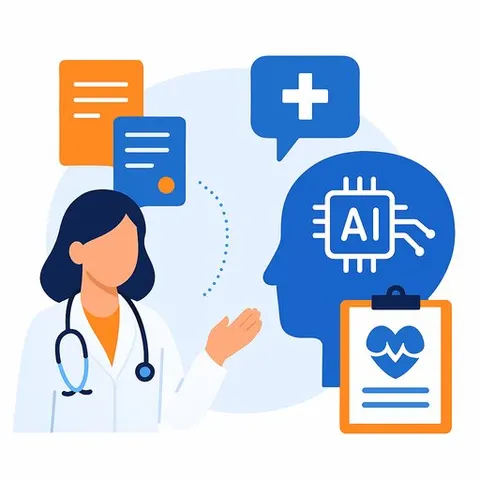
Healthcare organizations are adopting generative AI at a rapid pace, but the technology's reliability hinges on whether models draw from verified, curated data sources. Without that grounding, large language models can produce inaccurate responses that compromise clinical and operational decisions, according to Kayt Leonard, Director of Marketing for SAS' Global Health and Life Sciences practice.
"Generative AI is enabling a stronger approach to healthcare," Leonard said. "It allows physicians to move more quickly with the research they conduct to get answers, test theories and get clinical decision support. It helps validate data more quickly for claims and operational needs. And it also supports public health entities' effectiveness as they track diseases and respond to outbreaks."
Why ungrounded AI falls short in clinical settings
Algorithms are only as good as the data they rely upon. Many models return hallucinations - inaccurate or inconsistent responses - that can negatively affect critical decisions. In a healthcare setting, where patient outcomes and payment integrity are at stake, the margin for error is thin. Leonard said AI will only function as a trusted decision tool if models pull from approved, preselected sources.
That is what retrieval-augmented generation (RAG) enables. RAG combines two AI capabilities, retrieval and generation, to improve output quality. By pairing semantic search with generative AI and LLM technology, RAG retrieves relevant data from the right sources - including unstructured data like patient records - and delivers citation-backed, source-grounded responses.
Democratizing data access across healthcare teams
"When you are relying on generative AI in a healthcare setting, you need to be sure the model is always working with the right type of data," Leonard said. "And RAG can deliver more accurate, source-grounded responses that users can rely upon to make decisions."
The approach removes a longstanding barrier in healthcare analytics: the need for specialized coding or data science skills. Physicians, nurse practitioners, and practice administrators can query the system directly and get answers without going through an analyst. "RAG allows for real democratization of AI across the healthcare system," Leonard said. "You don't have to work with a data scientist or analyst to get answers."
Where RAG applies in real-world healthcare
RAG supports a range of healthcare functions, including clinical policy medical review, claims and payment integrity, and disease outbreak management. These models carry strong data governance, which helps maintain a compliant framework for use. AI for healthcare applications grounded in verified data let clinicians move faster without sacrificing accuracy.
"Physicians don't want to be down in the weeds all the time trying to find the data they need," Leonard said. "They want to be able to easily access the right information to make the right decision for the patient."
Why this matters for healthcare professionals
Unverified AI outputs in a clinical or claims context carry real consequences - denied payments, delayed treatment, or flawed outbreak response. RAG offers a practical path to using generative AI without gambling on the model's accuracy. For healthcare teams, the difference is between spending hours hunting for data and getting a sourced, reliable answer in seconds. The technology is available now, and the organizations that ground their AI in curated data will be the ones that can trust it when decisions count.