
AI news ·
Shimizu Corporation trials AI-powered robots for construction sites
Shimizu Corporation is testing AI robots on construction sites, including a humanoid that autonomously inspected the Torch Tower in Tokyo at 3 feet per second. The robots are designed to handle dynamic environments and learn tasks by imitating human workers, addressing Japan’s labor shortages.
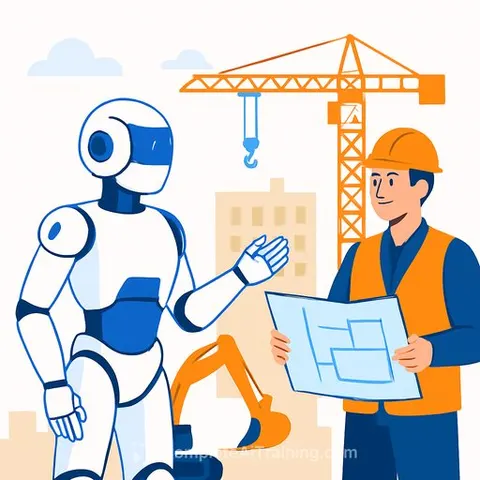
Japanese contractor Shimizu Corporation has begun trials of AI robots on construction sites to address labor shortages while improving productivity and safety. The tests include a humanoid robot that performs site inspections and robotic arms that learn painting tasks by imitating human workers.
The initiative centers on what Shimizu calls Physical AI - AI systems that use cameras and sensors to perceive real-world conditions and adapt robot behavior accordingly. Unlike conventional construction robots, which are typically limited to repetitive, pre-programmed operations, the new systems are designed to handle the dynamic environments found on active sites.
In one test at the Torch Tower in Tokyo, a humanoid robot moved through the site autonomously at a speed of 3 feet per second while carrying a camera. Shimizu is also evaluating multimodal large language models (LLMs) to analyze video captured during inspections, with the aim of streamlining site management.
A shift from pre-programmed machines
"For the construction industry, which faces critical labor shortages, AI robots represent a key solution," the company said. "Unlike conventional robots used in construction - which were often specialized machines limited to pre-programmed, repetitive motions - AI robots can function as versatile machines capable of performing multiple tasks."
The painting trials rely on robotic arms that learn painting tasks by imitating human workers, rather than following a fixed instruction set. Shimizu said the goal is a machine that can take on a wider range of jobs across a construction site.
Building a construction-specific AI ecosystem
The company said broader implementation of Physical AI will require a construction-specific AI ecosystem encompassing data collection, simulation, AI model development, and field testing. The trials are a practical example of AI for Real Estate & Construction applied to physical work, rather than back-office software.
Shimizu also expects the approach to help preserve and transfer specialized construction skills as Japan's skilled workforce ages. The company frames the robots as a direct answer to the industry's worker shortage.
Why this matters for real estate and construction professionals
The trials target a specific problem: routine but variable work such as painting and inspections, which resists traditional factory-style automation. If Shimizu's approach holds up, one versatile robot could cover multiple tasks that today require separate specialized machines. For firms facing a shrinking skilled workforce, the project also suggests a way to capture veteran know-how before it walks out the door.