
AI news ·
Signal blocks screenshots on iOS 27 and Android to prevent AI agents from reading private chats
Signal blocks screenshots on iOS 27 and Android when AI assistants try to read the screen, calling OS-level agents an "existential threat" to privacy. The gap leaves decrypted messages visible to system-level AI like Siri and Gemini, even with end-to-end encryption intact.
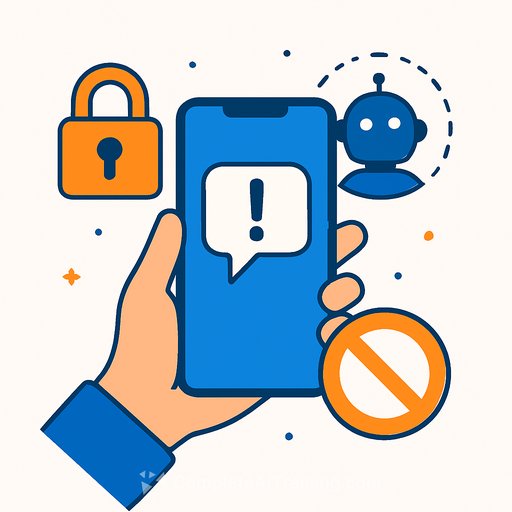
Signal is restricting screenshots on iOS 27 and Android to prevent AI assistants from capturing private messages displayed on screen. The company told Reuters that OS-level AI agents represent an "existential threat" to privacy because they can pull decrypted content directly from a device's display and process it externally, undermining end-to-end encryption.
The new protections kick in when an AI assistant attempts to access the screen. On iOS 27, Signal blocks screenshots entirely when this occurs. Supported Android versions trigger similar defenses. Signal had already blocked Microsoft's Recall feature on Windows, but the company describes its current defenses as incomplete.
How AI agents bypass encryption
Apple's Siri AI and Google's Gemini Intelligence can capture screen content to complete user tasks. Unlike traditional malware, these agents operate with system-level permissions. They read decrypted messages straight from the display - the one point where end-to-end encrypted content exists in plain text. Once captured, that content can be processed on external servers.
Meta's AI agent Muse recently captured Signal content on Android and macOS. This occurred through broad setup permissions, including accessibility tools and screenshots on macOS. Meta said the capture only happened with explicit user permission. The incident underscores a structural problem: permission models designed for human interaction do not account for AI agents that can silently observe screen output.
Gaps in the defenses
Signal acknowledges significant blind spots. macOS screenshots cannot be reliably blocked due to operating system limitations. AI access to file systems and notifications remains an unaddressed risk. Signal said Apple, Google, and Microsoft should make it easy for apps to block AI agents entirely, rather than leaving individual developers to patch partial defenses.
The core tension is architectural. End-to-end encryption protects messages in transit and on servers. But once a message arrives on a device, the operating system has full access to the decrypted content. AI assistants that integrate at the OS level inherit that access. For professionals handling confidential communications, this creates a gap between the security guarantees of encrypted messaging and the reality of AI-enabled operating systems. Understanding how to manage these risks is becoming essential knowledge - similar to how security teams now integrate threat detection into workflows, a shift reflected in AI Security Analytics Courses that address emerging attack surfaces.
Why this matters for creatives, developers, legal professionals, and writers
If you discuss client strategy, proprietary code, legal strategy, or unpublished work over Signal, an AI agent with screen access could capture that content without your knowledge. The message remains encrypted in transit, but the plain text on your screen is vulnerable. Check whether your device has AI screen-reading features enabled, and review which apps have accessibility or screenshot permissions. Signal's move is a stopgap - the real fix requires platform-level controls that do not yet exist.