
AI news ·
Singapore emerges as a hub for turning AI models into practical tools
OpenAI hired its first locally recruited forward-deployed engineer in Singapore in June 2025, joining an office with fewer than 20 employees. The role signals a shift where AI firms build Singapore teams to adapt models for real-world business use, not to train frontier systems.
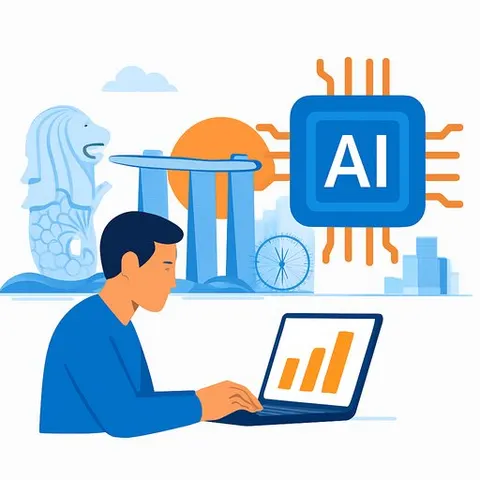
OpenAI hired Jordan Seow as its first locally recruited forward-deployed engineer in Asia-Pacific in June 2025, joining a Singapore office with fewer than 20 employees. The move reflects a broader shift: the world's leading AI companies are building teams in Singapore not to train frontier models, but to adapt them into tools that businesses and consumers can actually use.
Seow, 29, is now part of a fast-growing workforce focused on deployment and practical application. Global AI firms are expanding their Singapore presence to bridge the gap between raw model capabilities and real-world implementation across the region.
From research hub to deployment engine
Singapore has long courted technology investment through stable regulation, strong infrastructure, and a strategic location in Southeast Asia. What's changing is the nature of the work. Rather than competing with Silicon Valley on fundamental AI research, the city state is carving out a role in the less glamorous but commercially critical task of making models useful.
Forward-deployed engineers like Seow work directly with customers to integrate AI into existing workflows. The role blends technical depth with client engagement - a combination that Seow said is gaining visibility as a career path.
"It also makes roles that combine technical depth, customer engagement and practical implementation more visible," Seow said. "You don't necessarily have to follow a purely research or software engineering path to contribute meaningfully to AI."
New doors for local talent
The arrival of major AI employers is reshaping career options for Singapore-based professionals. Companies need people who can translate between what a model can do and what a hospital, bank, or logistics firm actually needs. That demands skills beyond pure coding - understanding industry context, managing client relationships, and solving integration problems.
For professionals in customer-facing and operational roles, the trend signals a shift in what AI-adjacent careers look like. Technical literacy matters, but so does the ability to scope problems, communicate trade-offs, and drive adoption. AI Engineering Courses increasingly cover deployment and integration, not just model building.
Why this matters for customer support, sales, and management professionals
AI deployment creates demand for people who understand both the technology and the end user. Customer support teams will handle AI-augmented workflows. Sales professionals will need to explain AI-powered features credibly. Managers will oversee teams where AI handles routine tasks and humans focus on exceptions and relationships.
The Singapore hiring pattern suggests these roles are not theoretical. Companies are paying for forward-deployed engineers to sit between product teams and customers - a function that mirrors what solutions consultants, customer success managers, and technical sales leads already do. The difference is the technology they're deploying.
Seow's path - from local hire to a role that didn't widely exist three years ago - shows how quickly the job market is adapting. For professionals in education, hospitality, events, and marketing, the lesson is the same: understanding how AI tools work in practice is becoming a baseline expectation, not a specialist niche. AI Technology Leadership Courses address the strategic side of these decisions, but the operational reality affects every customer-facing function.