
AI news ·
South Korea considers fines for attorneys citing AI-generated false precedents
South Korea plans to fine attorneys for submitting AI-generated false citations. The judiciary secured $10.6 million to build an internal verification system.
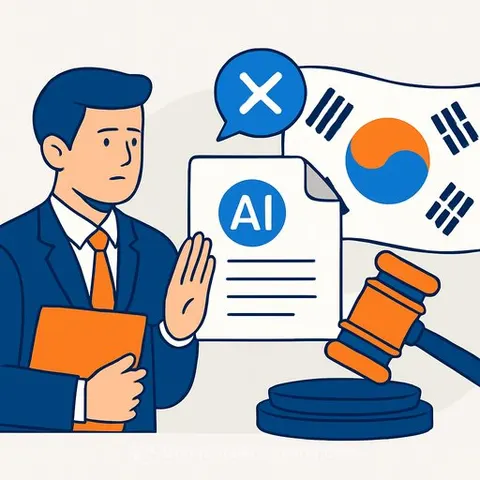
South Korea's judicial branch is implementing new measures to penalize attorneys who submit AI-generated false citations in court proceedings. The National Court Administration announced on June 15, 2026, that it is reviewing legislative revisions to impose fines and mandate AI disclosure, addressing a growing problem of "ghost precedents" that delay trials and waste judicial resources.
The burden of verifying citations
Judges report a sharp increase in attorneys citing nonexistent cases and statutes during proceedings. The verification process now requires judges to manually check every reference. "In written judgments, I used to point out nonexistent cases cited by lawyers in footnotes," said one judge at a Seoul court. "Now, there are so many that I point them out in brackets in the main text."
Documented cases of AI hallucinations
Several recent filings illustrate the scale of the problem. At the Daegu High Court, an attorney cited a nonexistent Supreme Court precedent. When the court asked for clarification, the attorney submitted a second legal filing citing another case that also did not exist.
In a separate instance at the Ulsan District Court, a lawyer cited an unrelated Supreme Court precedent and later admitted they "did not properly review the content after looking up the precedent using Google Gemini." Courts are actively rejecting these arguments. A judge at the Seoul Southern District Court recently ruled in favor of a plaintiff in an investment dispute, explicitly noting in the written judgment that the defendant's claims relied on precedents that do not exist.
Judicial countermeasures and internal systems
To counter this, the judiciary is seeking legislative amendments to fine attorneys who submit false statutes or precedents. Procedure rules may also change to require parties to disclose if they used artificial intelligence to prepare their submissions. Currently, courts can restrict arguments, request disciplinary measures, or impose litigation costs when AI misuse delays proceedings.
The National Court Administration is also building technological defenses. In February, the judiciary added a verification function to the Judicial Information Disclosure Portal, allowing users to confirm whether court case numbers are valid. The administration also distributed an AI prompt guidebook to help judges detect false precedents, reflecting a broader industry shift toward secure AI for Legal practices that mandate human verification of automated outputs.
Furthermore, the agency secured 16.1 billion won ($10.6 million) to develop an internal AI trial support system. A pilot version launched in February includes Supreme Court precedents, practical manuals, and legal commentaries, with plans to integrate generative AI in later stages.
Why this matters for legal professionals
Courts will no longer treat AI hallucinations as harmless typos. Attorneys face potential fines, disciplinary action, and adverse rulings if they submit unverified citations. Legal teams must implement strict verification protocols for any AI-generated research before filing, ensuring every case number and statute is cross-referenced with official judicial databases.