
AI news ·
South Korean courts seek to fine lawyers citing AI-generated false precedents
South Korea plans to fine lawyers for submitting AI-generated fake case law. The courts allocated 16.1 billion won to build an internal AI verification system.
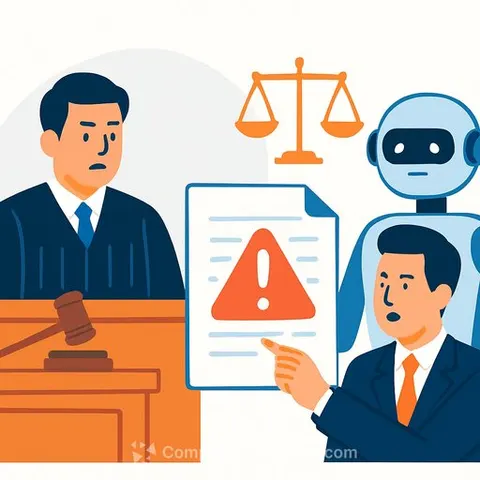
South Korea's judiciary is cracking down on attorneys who submit AI-generated "ghost precedents" in court filings. The National Court Administration is pursuing legislative changes to fine lawyers and mandate AI disclosure after a surge in hallucinated citations forced judges to waste hours verifying fake case law.
Ghost precedents in court filings
Judges are flagging a sharp increase in false citations. "In written judgments, I used to point out non-existent cases cited by lawyers in footnotes," said one judge at a court in Seoul. "Now, there are so many that I point them out in brackets in the main text."
The burden falls on the bench to verify every reference. "It is more time-consuming now, because I have to go through each cited case," the judge said.
Real-world examples highlight the severity of the problem. At the Daegu High Court, an attorney cited a non-existent Supreme Court precedent, then cited a second fake case when the court asked for clarification. In Ulsan, a lawyer admitted they "did not properly review the content after looking up the precedent using Google Gemini".
Courts push for fines and verification tools
The judiciary is drafting legislative amendments to allow courts to fine attorneys who submit false statutes or precedents. New procedure rules would also require parties to disclose if they used AI to prepare their submissions.
Until those rules pass, judges can restrict arguments, request disciplinary action, or impose litigation costs on lawyers who delay proceedings with fabricated citations. A Seoul Southern District Court recently ruled for a plaintiff specifically because "the defendant's claims are based on precedents that do not exist".
To combat the issue, courts added a verification function to the Judicial Information Disclosure Portal in February, allowing users to check if case numbers are valid. The administration also distributed a guidebook with AI prompts to help judges detect fake citations.
Building an internal AI defense
The National Court Administration allocated 16.1 billion won (S$13.6 million) to build its own internal AI system. A pilot version of this trial support system launched in February, loading Supreme Court precedents, written judgments, and legal commentaries into a verified database. The judiciary plans to integrate generative AI into this secure environment in the next phase.
For legal teams, this shift means relying on unvetted commercial tools carries immediate professional risk. Integrating reliable AI for Legal research workflows is now a baseline requirement to avoid sanctions.
Why this matters for legal professionals
Courts are shifting the burden of AI accuracy onto the attorney. Submitting a hallucinated citation is no longer a simple clerical error; it is becoming a sanctionable offense that can trigger fines, disciplinary action, and adverse rulings. Legal teams must audit every AI-generated citation against primary sources before filing, treating AI output as a draft rather than a final legal fact.