
AI news ·
Spotify teams up with Sony, UMG, WMG, Merlin and Believe on artist-first AI music products
Spotify teams up with Sony, UMG, WMG, Merlin, and Believe to build artist-first AI features with consent, licensing, and payouts. Expect creator controls, attribution, anti-spam.
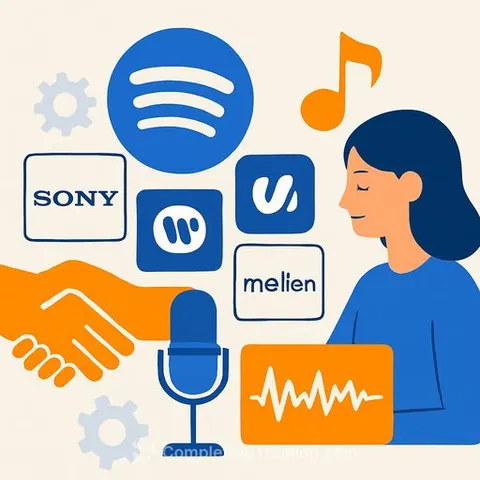
Spotify teams up with Sony, UMG, WMG, Merlin, and Believe to build "artist-first" AI music products
On October 16, 2025, Spotify announced new partnerships with Sony Music Group, Universal Music Group, Warner Music Group, Merlin, and Believe to develop AI music products under a clear promise: put artists and songwriters first.
The company is building a generative AI research lab and product team, and says new offerings will be created under upfront agreements with rightsholders. This follows new AI policies and a crackdown that removed 75 million spam tracks over the past year.
Why this matters for product teams
- It sets a template for shipping AI features with consent, licensing, and compensation baked in.
- It signals a shift from "move fast and ask forgiveness" to "secure rights first, launch second."
- It elevates creator controls and attribution as core product requirements, not add-ons.
The four principles, translated into execution
- Upfront partnerships: Build new AI features only after direct licensing with labels, publishers, and distributors. Product implication: legal and product must co-own the launch plan.
- Choice in participation: Artists and rightsholders choose if and how they participate. Product implication: offer opt-in, usage scopes, and clear controls per feature.
- Fair compensation and new revenue: AI features should create new income streams with transparent credit. Product implication: design for attribution, usage metering, and payout logic from day one.
- Artist-fan connection: AI augments creativity; it doesn't replace it. Product implication: focus on co-creation, discovery, and engagement features that spotlight human creators.
What Spotify is building
- A gen AI research lab and product team combining internal R&D with external tech partnerships.
- Creator-informed development, with artists, producers, and songwriters consulted on tools and policies.
- Guardrails: content integrity, provenance, and enforcement consistent with its recent policy moves.
Where the industry stands (in their own words)
- Spotify's Alex Norström: "Technology should always serve artists, not the other way around."
- Spotify's Gustav Söderström: AI is a major shift; Spotify plans to build it with the industry and grow its AI team.
- Sony's Rob Stringer: direct licensing before launch is "the only appropriate way" to build these products.
- UMG's Sir Lucian Grainge: Gen AI must sit inside a commercial model where all parties can flourish.
- WMG's Robert Kyncl: new AI licensing deals should protect and compensate rightsholders.
- Believe's Denis Ladegaillerie: prioritize "responsible AI" and "value-creative AI" that fuels artist development.
- Merlin's Charlie Lexton: partner with companies that respect copyright and enrich, not displace, artists.
What this means for your AI product roadmap
- Data and rights strategy: Treat datasets, training rights, and output licensing as first-class requirements. Build a licensing intake pipeline and contract-aware data catalogs.
- Participation controls: Offer granular opt-in, content scope (training vs. style transfer vs. remix), and revocation. Maintain audit trails.
- Attribution and payouts: Track contributions across datasets, prompts, stems, and co-creations. Expose credits in UI; meter usage for payouts.
- Abuse prevention: Integrate content authenticity checks, spam detection, provenance metadata, and model use policies.
- Co-creation features: Build tools that help creators iterate faster, test concepts, and engage fans without eclipsing human authorship.
Metrics to instrument from day one
- Creator opt-in rate, feature-level participation, and retention.
- Share of plays or sessions influenced by AI features.
- Average new revenue per participating artist/songwriter.
- Attribution completeness and dispute resolution time.
- Policy violations per 1,000 creations and time-to-remediation.
- Licensing cycle time from deal approval to product availability.
Risk and governance checklist
- Copyright-safe training and output generation; document provenance and consent.
- Clear style cloning boundaries and name/likeness protections.
- Transparent user labeling for AI-assisted content.
- Cross-functional review across product, legal, trust & safety, and comms.
For context on policy directions, see the Spotify Newsroom and the U.S. Copyright Office's AI resources here.
What to watch next
- Spotify's first "artist-first" AI launches: creator controls, attribution UX, and payout models.
- New licensing frameworks for training, style simulation, and co-creation.
- Tooling for provenance and spam reduction at catalog scale.
- Expansion to more rightsholders and potential APIs for partners.
Action steps for product leaders
- Stand up a rights and data intake pipeline with model cards tied to licensing terms.
- Ship creator participation controls before public rollout; default to consent.
- Design attribution and metering early-retrofitting later is costly.
- Define abuse policies with automated detection and human review loops.
- Run creator councils for feedback on incentives, UX, and policy clarity.
- Upskill teams on AI product, policy, and safety. Explore role-based learning here.
The signal is clear: AI music products will be built with consent, credit, and compensation at the core. Teams that operationalize these principles now will ship faster with fewer surprises later.