
AI news ·
Student achievement remains below pre-pandemic levels as reading for fun declines and schools confront AI and cell phone distractions
New national data shows student reading and math scores remain below pre-pandemic levels, with fewer children reading for pleasure. A majority of teachers now believe AI tools are hindering critical thinking development.
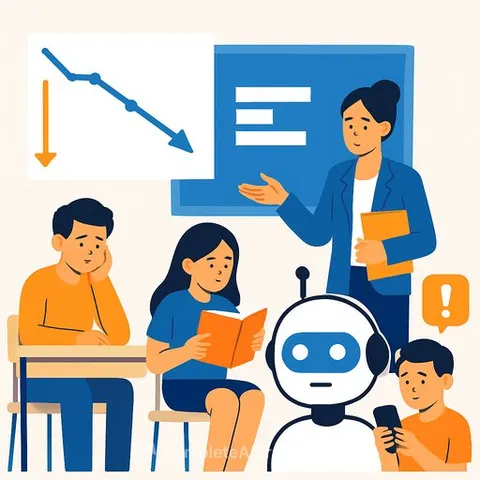
New national data confirms that student achievement in reading and math remains below pre-pandemic benchmarks, even as the current school year ends. The persistent gaps arrive alongside a documented shift in student behavior: fewer children report reading for pleasure, and educators are increasingly questioning whether AI tools and cell phones are reshaping learning outcomes in fundamental ways.
Recent assessments show the recovery from pandemic-era disruptions has been slow. Several years after classrooms returned to normal operations, performance in core subjects still trails earlier levels. Federal education surveys now point to a parallel behavioral trend - a decline in recreational reading that researchers say is closely tied to academic performance.
Fewer students are reading for fun
Students who read regularly outside of school tend to score higher in both reading and math, according to long-running federal education research. The latest data, however, suggests fewer young people are choosing books in their free time. This shift raises questions about whether digital entertainment, social media, and other screen-based activities are displacing time once spent on reading.
The connection between voluntary reading habits and test performance is well established. When that habit erodes, educators worry the academic floor drops with it. The decline is not confined to one grade level or demographic; it appears across the broader student population tracked by federal surveys.
AI tools and critical thinking concerns
Artificial intelligence has emerged as another variable in the classroom equation. A recent survey of teachers found that a majority believe AI is making it harder for students to develop critical thinking skills. The concern is that students may rely on technology to complete assignments rather than engage deeply with the material.
In a more direct response, Florida's attorney general filed a lawsuit against OpenAI, alleging potential harms to young users and arguing that tools like ChatGPT could contribute to diminished critical thinking. OpenAI has denied those claims and said it has implemented safeguards for younger users. Resources on AI for Education have grown in parallel, as districts look for guidance on integrating these tools without undercutting learning goals.
Schools move to limit cell phones
At the same time, a growing number of districts and states are implementing restrictions or full bans on phone use during the school day. The goal is to reduce distractions and improve focus. Some educators report early signs of success: students appear more engaged, and more time is spent on reading and classroom interaction when phones are put away.
Experts caution that evidence of long-term academic improvement from these bans is still developing. Many education researchers say technology may not be the sole driver of declining performance. They point instead to a combination of factors, including lingering pandemic learning loss, attendance challenges, and broader shifts in how students interact with information in a digital world.
That has led to a larger question for schools: are current education standards keeping pace with a generation raised on screens, AI tools, and constant connectivity - or are schools still measuring success using systems built for a pre-digital era?
Why this matters for education professionals
Educators are now operating at the intersection of three overlapping forces: incomplete academic recovery, declining reading habits, and rapid technology adoption. The data does not point to a single cause, which means classroom responses must be multi-layered. Phone bans may improve immediate engagement, but they won't rebuild reading stamina on their own. AI policies need to address not just cheating risks but the deeper question of whether tools are replacing the struggle that builds critical thinking. For teachers, administrators, and curriculum designers, the task is to set standards that acknowledge how students actually live now - without abandoning the evidence base on what produces long-term academic growth.