
AI news ·
Student journalists say AI brings distrust and new rules to school newsrooms
Student journalists from California, New York, and Michigan say strict AI surveillance-including flagged search histories and typing-speed checks-is pushing them to dumb down their writing and add typos to prove authenticity.
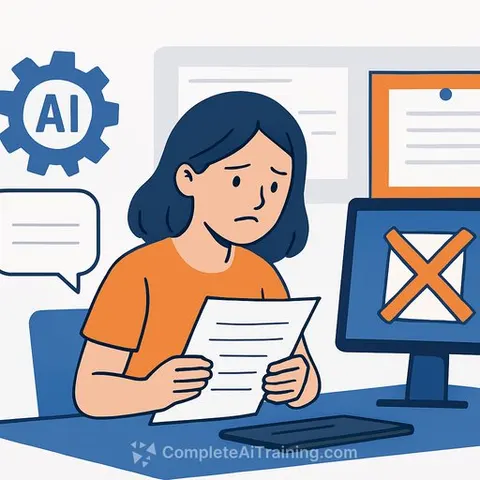
In the nearly four years since generative AI entered schools, student journalists have watched their work change in ways that mirror - and sometimes exceed - the disruption facing professional newsrooms. Three student editors from California, New York, and Michigan told The 74 that AI has reshaped how they write, how they're supervised, and how much they trust the adults running their publications. The result is a portrait of school newsrooms struggling to balance vigilance with the creative freedom that draws young people to journalism.
Surveillance and suspicion in school newsrooms
At Berkeley High School in California, Cid Frydman, a rising senior who writes for the Berkeley High Jacket, said strict AI policies have bred resentment among student writers. Editors monitor documents closely, examine search histories, and analyze typing speed and word choices to match drafts against previous work.
"I think a lot of the people higher up on my paper, and in journalism in general, don't have a lot of trust in writers anymore, especially with so many AI resources that are out there," she said. Staffers have been let go over suspected AI use, and school-issued Chromebooks block access to ChatGPT and Claude, flagging any attempt to reach them.
The heavy-handed approach has a cost. "We're here because we love journalism," Frydman said. "We're here to write about things that we're hopefully passionate about, and the heavy approach of 'There's no tolerance whatsoever,' and not even giving writers the grace and the trust to make their own decisions and do this work on their own - just minding it and monitoring it so heavily, I think it's very discouraging."
How AI changes the way students write
Frydman said she's adopted a minimalist approach to writing, holding back details to avoid drawing suspicion from editors or teachers. "A lot of times, I find myself sort of slimming down my writing to not go so into detail on things because it'll be suspected to be something that's not original," she said.
Tova Weiss, a recent high school graduate in Ann Arbor, Mich., who writes for the Youth Environmental Press Team and jGirls+ Magazine, said she's seeing many young journalists "adjust their writing voice" to avoid being flagged. Some now intentionally add typos to their work to prove it was written by a human. "It's absolutely devastating to watch how many people are intentionally damaging or diminishing the quality and authenticity of their work," she said.
Not every newsroom relies on surveillance. At the Youth Environmental Press Team, where Weiss is an editor, the publication developed formal guidelines after fielding questions from reporters about whether they could use AI for outlining, formatting statistics, or transcription. The policy that emerged prohibits AI-written and AI-edited work - including heavy use of tools like Grammarly - but allows transcription services and basic spell-check. At jGirls+ Magazine, there's no written policy, but submissions that appear AI-generated are rejected.
One student journalist described a more informal approach at her publication: Every article must include a quote from a student in each grade level, a structural rule that makes it hard for AI to intrude. And in some cases, the students said, teachers are the ones overusing AI - generating lesson plans, creating assignments, and grading work through chatbots. One student, who asked not to be quoted directly, described a teacher who would "copy and paste straight off of Chat GPT or Claude" and give assignments that were clearly AI-generated.
AI detectors create their own problems
Despite the strict policies, student journalists say AI detectors are widely unreliable. "Even if you write something really well, it'll just automatically assume that it might be AI and your writing will get flagged, which has happened to a lot of my friends," Frydman said. Weiss said detectors should be used only when there's already reason to suspect AI involvement - a student with a track record of misuse, or writing that reads "off."
Veronica Mollod, a rising senior at the High School of American Studies at Lehman College in the Bronx, said most people who don't spend time in schools overestimate how much teens use AI. "People not in school are like, 'Well, I didn't have this great tool. If I had it, I wouldn't have done anything,'" she said. But relying on the technology isn't yet common practice for most students she knows.
Why this matters for writers
For working writers and editors, the student experience is a warning about what happens when AI suspicion replaces editorial judgment. The best newsrooms - student or professional - will develop policies that distinguish between AI as a productivity tool and AI as a ghostwriter, and they'll trust their reporters enough to police the line. As Weiss put it, "Demonstrating our talents as humans and as youth is a form of silent protest against AI by proving that artificial intelligence isn't necessary to produce professional-quality journalism." For journalists learning to navigate this environment, resources like AI for Writers Courses and AI for Education offer practical guidance on where the tools help and where they hurt.